What Is a Secondary Display and Why Does It Increase Basket Size?
Published 9 October, 2026
6 Min Read
Someone nips into the supermarket for a bag of penne. On the shelf edge beside it hangs a clip strip of grated parmesan. They hadn’t planned to buy it, but it ends up in the basket.
That’s a secondary display doing its job. A physical store is where shoppers are most open to buying things they didn’t plan to. NielsenIQ data shows they’re about twice as likely to make an impulse snack purchase in store as online. Where a product sits, and how often a shopper sees it, has a direct effect on what reaches the till.
This guide explains what a secondary display is and why it works. It also covers where to put one and how to tell if it’s paying for itself.
A secondary display is any spot where a product is shown outside its usual home on the category shelf. The home shelf is the primary display. The secondary display is the product’s second chance to be noticed.
It can be permanent or temporary. A clip strip that stays on the shelf edge all year is a secondary display. So is a dump bin of seasonal chocolate that appears for six weeks before Easter and then goes.
The most common formats are:
The format matters less than the principle. The product is somewhere the shopper wasn’t expecting to see it, at a moment when they’re likely to want it.
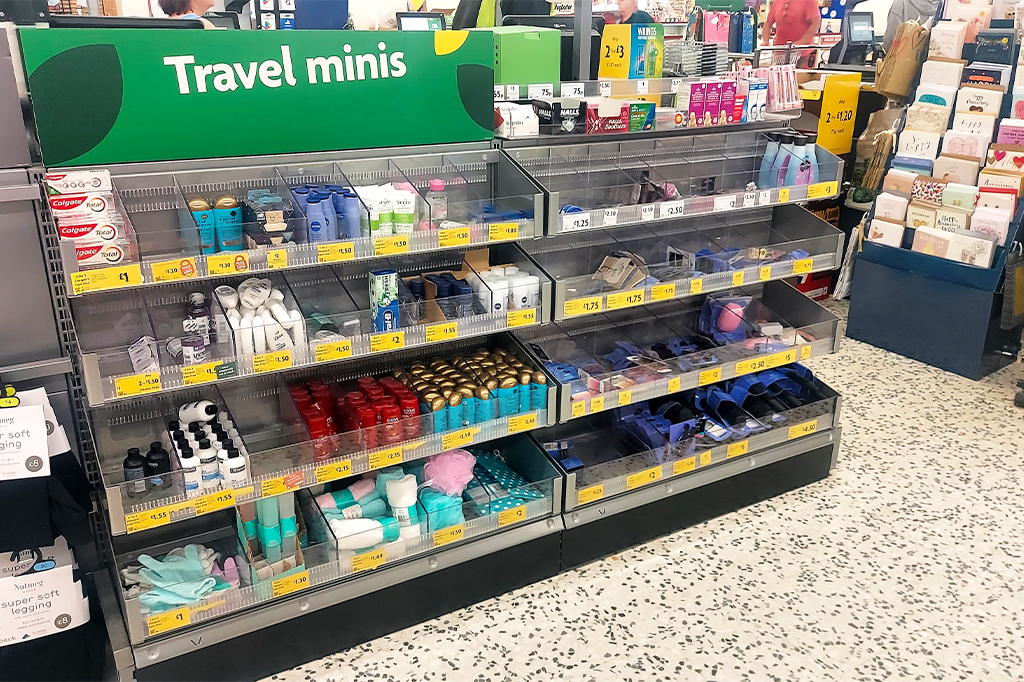
Basket size grows when shoppers add items they hadn’t planned to buy. Secondary displays make that more likely in three ways.
They Give The Product More Chances To Be Seen
A shopper who walks past a product once on its home shelf might not notice it. Put it in front of them again at the aisle end or the till and the odds improve.
They Take The Product Away From Its Competition:
On the home shelf, a pack of batteries sits next to a dozen other brands and sizes, and the shopper has to compare. On a clip strip beside the toys, it’s the only option in sight. Fewer choices make for a quicker decision.
They Remind Shoppers What The Product Is For:
A product placed next to the thing it goes with answers a question the shopper hadn’t asked yet: batteries by the toys, sauce by the pasta, chargers by the travel essentials. This kind of cross-merchandising works because it puts products in the context of a need rather than a category.
None of this needs a large footprint. A single clip strip on a busy shelf is seen by every shopper who walks down that aisle. For more ideas on making the most of these moments, read our guide on how retailers can drive sales with effective impulse solutions.
Till And Queue Areas:
Shoppers in a queue have time and a reason to look around. Small, low-cost items do well here, such as confectionery, batteries, lip balm and travel-size toiletries. A Rigid Clip Strip holds up to 12 heavier items without using counter space, and countertop acrylic stands keep small products tidy and easy to reach.
Aisle Ends And Entrances:
These are usually the busiest spots in a store, so they suit seasonal ranges and promotions that need volume. A Square Wire Dump Bin or Rectangular Wire Dump Bin fills quickly and folds away when the promotion ends. Add a Showcard Frame on a Showcard Wire Basket Frame Holder so the offer can be read from further down the aisle. Planning for the busiest trading weeks? See why high-impact impulse and promotional displays matter in the Golden Quarter.
On The Shelf Edge, Next To Related Products:
This is cross-merchandising in its simplest form. A Flexible Clip Strip hangs from the shelf edge on a Crimped ‘S’ Hook and displays up to 12 items without taking up any shelf space. If the shelf already has data strips fitted, a Clip Strip Stud Plate (85.2603) attaches the clip strip straight to the data strip instead.
The right fixture depends on what’s going on it and how often it will change.
Match The Fixture To The Product:
Light, packeted items suit a flexible clip strip. Heavier products need a rigid one. Bulky or high-volume promotional stock belongs in a wire dump bin, and a Dump Bin Wheeled Base makes a 600 x 600mm bin easy to move for cleaning or a layout change.
Make It Easy To Update:
Promotions change, and a display showing last week’s price causes more problems than it solves. Front-loading Wire Basket Data Strips clip straight onto dump bins and shelf edges, so store teams can swap pricing in seconds without tools.
Think About Materials:
For ranges with a sustainability story, Ecovision® cardboard hang tabs and EcoPlastic carton hooks (made from biodegradable polypropylene) are lower-impact ways to hang products from clip strips and temporary cardboard displays.
Ask About A Custom Fit:
If a standard clip strip doesn’t suit your packaging, we can die-cut the hooks in house to match your product. For something more distinctive, our team can design custom wire display baskets or bespoke acrylic units. Find out more in what acrylic fabrication is and why retailers use it.
A primary display is a product’s permanent home on its category shelf. A secondary display is any extra location outside that shelf, such as a clip strip, aisle end, dump bin or till point unit. Retailers use secondary displays to increase visibility and encourage unplanned purchases.
Yes, when they’re placed well. Most purchase decisions are made in store (POPAI puts the figure at 76%), so showing a product a second time, away from competing brands and next to a related item, makes an unplanned purchase more likely.
Compact, fast-moving products with a low price point work best, along with items that pair naturally with something nearby. Good examples include confectionery, batteries, snacks, seasonal gifts and accessories that go with a main purchase.
Compare sales during the display period with the weeks before it, and with similar stores that didn’t run the display. Track attachment rate (how often the display item is bought alongside the main product) and average transaction value to see the effect on basket size.
A display that works in one store needs to work the same way in fifty. That comes down to consistency and upkeep.
Use the Same Fixture Specification Everywhere:
When every store has the same clip strip, hook and showcard frame, results can be compared fairly and store teams only need one set of instructions.
Keep It Simple to Restock:
A half-empty display looks neglected and sells less. Clip-on components and wheeled bases make it easier for busy teams to keep displays full and tidy.
Trial Before You Roll Out:
Run the display in a handful of stores, keep a matched group as a control, and measure the difference before committing across the estate. That gives you a clear return on investment to take to the wider business.
That clip strip of parmesan won’t change a store’s numbers on its own. Repeat that small addition across every shopper in every store, though, and it adds up quickly.
Browse our Impulse & Promotional range to find the right fixtures for your store, or talk to our team about a custom wire display basket or die-cut clip strip.