Gravity Feed Shelf Systems: Benefits for High-Turnover Categories
Published 9 October, 2026
5 Min Read
Walk down a drinks aisle an hour after a restock and you will usually find the same thing: gaps at the front, cans pushed back out of reach, and a display that looked full at nine and patchy by ten. High-turnover categories, drinks, dairy, deli, chilled snacks, sell fast enough that manual facing cannot keep pace. Gravity feed shelf systems solve this by using the product’s own weight to keep stock moving forward, so the shelf edge stays full without someone standing there refacing it every twenty minutes.
A gravity feed shelf system is a shelving mechanism that moves stock towards the front of the shelf automatically, using rollers, sprung pushers or a sloped tray, rather than relying on staff to pull products forward by hand. As a customer takes the front item, the next one moves up to replace it.
Harrison Retail’s shelf management range covers several formats built on this principle. Roller Trays use a rolling mechanism to keep flat-bottomed stock, cans, cartons, boxed goods, at the front of the shelf. Pusher systems use a spring-loaded mechanism instead, suited to lighter or less uniform packaging. Both do the same underlying job: they remove the need for constant manual facing.
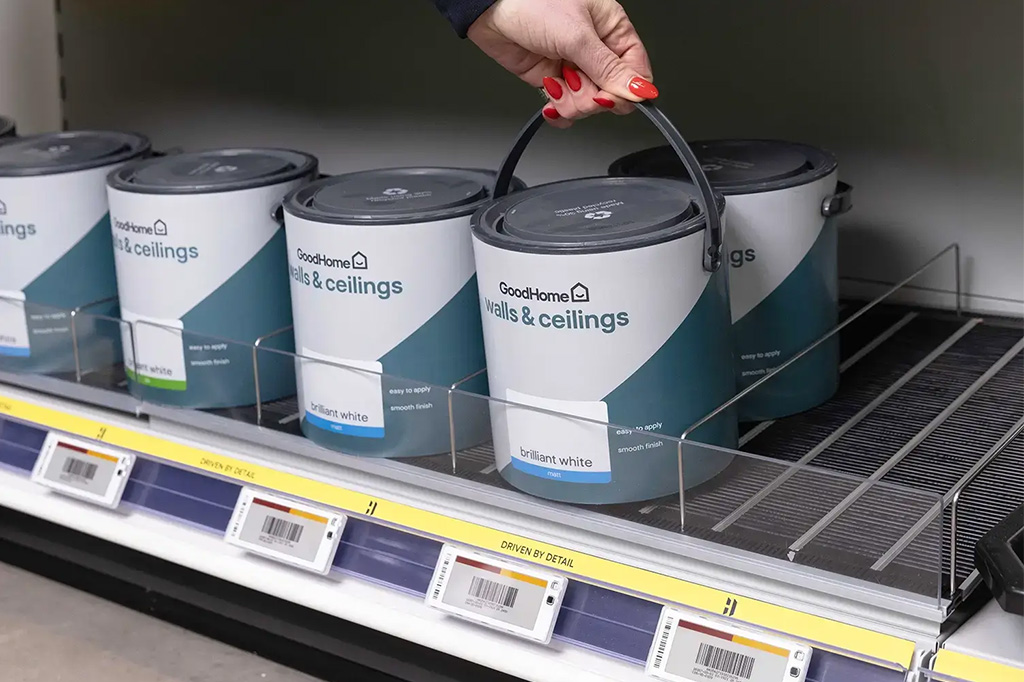
Static shelving works fine for slow-moving lines. It struggles with anything that sells in high volume.
Fast-selling products empty out within hours, and gaps start to show before staff get back round to that aisle. Refacing shelves by hand takes time that busy stores, particularly those running lean on the shop floor, often cannot spare. An emptied-out, disorganised shelf does more than look untidy, too. For chilled and perishable categories especially, it can make stock look older or less fresh than it actually is, which affects how customers shop that section.
Gravity feed systems address these problems directly, and the benefits compound the higher a product’s turnover.
Displays stay front-facing without staff needing to intervene between deliveries, since each system does that work automatically as stock is sold. Facing and restocking take less staff time, freeing people up for jobs that actually need a person, like helping customers or managing deliveries. Because new stock loads in behind what is already on the shelf, older stock naturally gets sold first, supporting proper rotation without anyone having to check dates by hand. And a shelf that is always full, front-faced and neatly arranged simply looks better, which matters in high-traffic aisles where first impressions form fast.
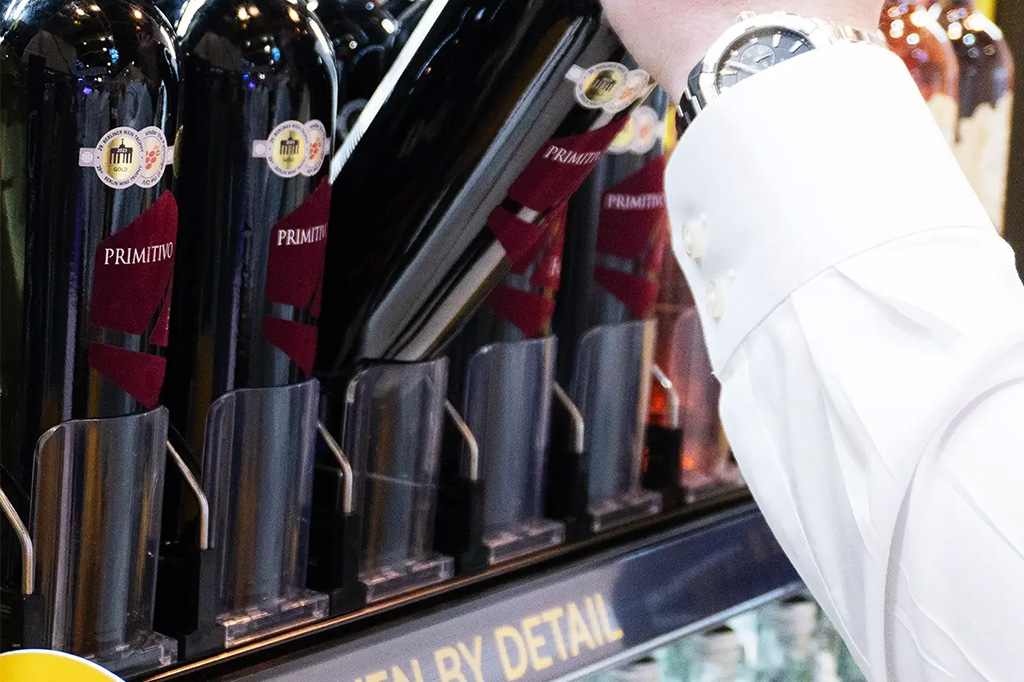
Not every category needs this level of shelf management, but a few benefit disproportionately.
Drinks and canned goods are a natural fit. Roller trays are built to handle heavy, flat-bottomed stock reliably, which suits multipacks, cans and cartons in high-traffic aisles. Harrison Retail has also engineered gravity feed into more specialist applications, including a single-can dispensing solution originally developed for a major drinks brand, which uses a revolving door and built-in gravity feed to keep stock automatically restocked and visible at the front of shelf.
Deli and bakery counters have their own pressures, with individually packed items that need to stay upright and forward-facing as they are picked. A dedicated deli pusher handles this without the products sliding out of line.
General high-turnover grocery lines, snacks, chilled goods, packaged essentials, are usually best served by Harrison Retail’s combined shelf pusher system or modular shelf dividers, which pair gravity feed with adjustable width and depth for a wide range of product sizes.
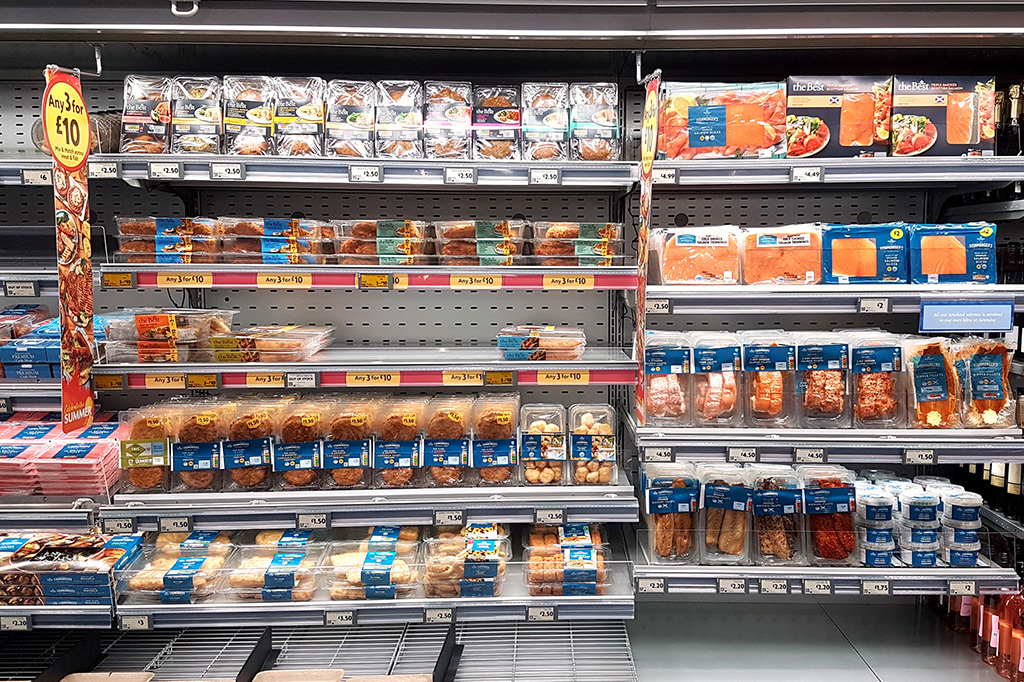
The right format depends on what is sitting on the shelf.
Roller trays suit heavy, flat-bottomed products in busy, high-footfall aisles where reliability matters most. Pusher systems work better for lighter or irregularly shaped items that need a gentler, more controlled feed towards the front. Because Harrison Retail’s systems are customisable in width and depth, many stores run one format across several categories rather than sourcing something different for every aisle, which simplifies both installation and ongoing maintenance. If dividers and organisation are more of a priority than feed itself, it’s worth reading how shelf dividers improve stock rotation and facing as a companion piece to this one.
It uses rollers, springs or a sloped tray to move stock towards the front of the shelf automatically as items are sold, keeping displays full without manual refacing.
Flat-bottomed, high-turnover stock such as cans, cartons and multipacks suits roller trays best, while lighter or irregularly shaped items usually work better with a pusher system.
Yes. Because stock moves forward on its own, staff spend less time refacing shelves by hand and more time on tasks that need a person, such as customer service or replenishment.
High-turnover categories put more pressure on a shelf than most retailers plan for, and standard shelving usually cannot keep up on its own. Gravity feed systems fix that at the source: less staff time spent facing shelves, stock that rotates properly, and a shelf edge that looks full even during a busy trading day.
Harrison Retail’s shelf management range, including roller trays, pusher systems and modular dividers, is customisable to fit different products, shelf types and store formats. Get in touch with the team to talk through which format suits your highest-turnover categories.