Modular Shelf Dividers: A Buying Guide for Retail Property Teams
Published 20 November, 2026
7 Min Read
A shelf divider that fits perfectly in your flagship store can be useless in store 40. The shelves are 50mm shallower, the fixtures came from a different supplier, and the planogram changed three weeks after launch. For property teams, the real cost of a divider system rarely shows up on the purchase order. It shows up later, as extra install visits, a growing list of part codes, and stores that slowly drift away from the standard you signed off.
Modular shelf dividers are designed to avoid that. This guide covers what they are, what to check before you specify them across an estate, and how to roll them out without creating more work for your teams.
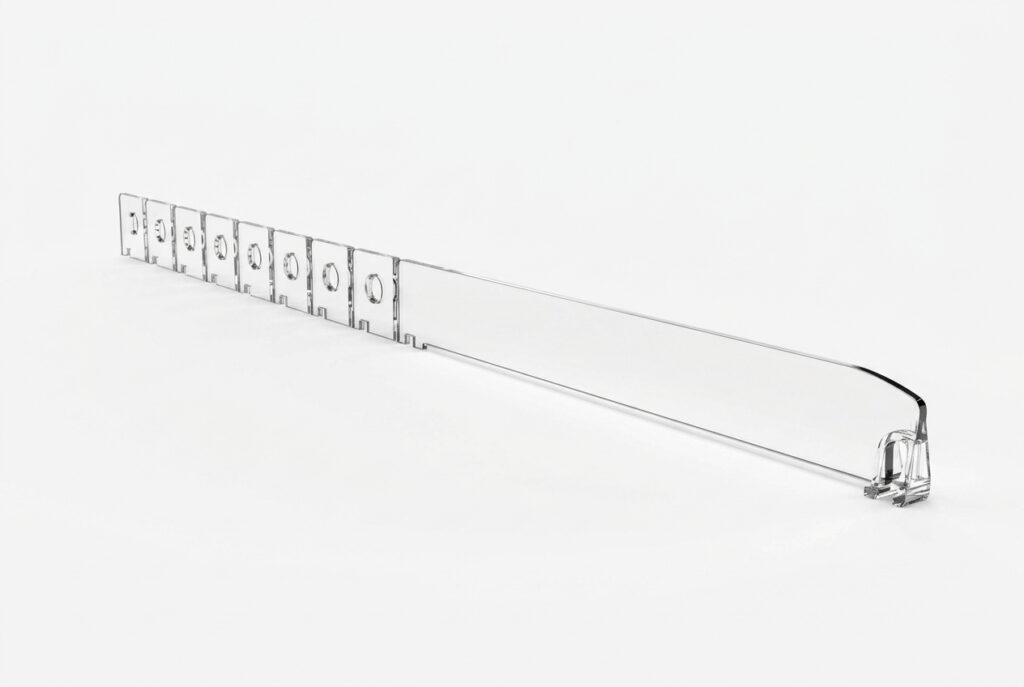
Modular shelf dividers are adjustable product separators that fix to a shelf using a T-rail, magnetic strip or clips. You can snap, extend or reposition them to suit different shelf depths and product widths, so one system works across mixed fixtures and store formats.
A typical system has four parts:
Fixed dividers are made for one shelf depth and one product. They work well in a bay that never changes. Across an estate with different fixtures and regular resets, they tend to turn into a stock-holding problem.
Dividers are usually treated as a merchandising decision. In practice, the property team lives with the consequences, because you own the specification, the rollout and the snagging list.
Most multi-site retailers run a mix of shelving: older metal gondolas in some stores, newer systems in refitted ones, and different suppliers depending on when each store opened. A modular system that adapts to shelf depth and mounting surface lets you write one specification instead of five.
Fewer part codes also mean less implementation risk. Every bespoke component is another thing that can arrive late, be fitted wrongly or not fit at all. A shorter parts list usually means a shorter snagging list.
Then there’s the working life of the system. Planograms change, and when they do, modular dividers can be moved and resized in store. Fixed dividers often get thrown away and reordered, which means a second purchase and a second install. Shelves that stay neat and faced up also help your operations and marketing colleagues hit the store standards they’re measured on.
1. Shelf Depth Flexibility
Shelf depths vary more across an estate than most people expect. Look for dividers with a break-away or snap-off design, so store teams can size them on site without tools. Harrison Retail’s Breakable Shelf Dividers adjust in 25mm steps and come in two ranges: 185mm to 385mm, and 385mm to 585mm. Between them, they cover most standard retail shelf depths.
2. Divider Height
Height depends on what sits between the dividers. A 60mm divider suits low, stable packs such as boxed goods and pouches, and keeps the shelf looking open. A 120mm divider is better for taller or lighter products that tend to lean into the next facing. Agree early which categories get which height, so you don’t end up ordering for every bay.
3. Mounting Method
The rail holds everything in place, so match it to the shelf surface.
Magnetic rails are quicker to move. Adhesive rails stay put on surfaces a magnet can’t grip, such as wood or glass.
4. Fixture And ESL Compatibility
Check rail lengths against real shelf widths before you order. Harrison Retail’s T-rails run from 100mm up to 1,320mm, with common lengths including 600mm, 1,000mm and 1,240mm. If your stores use electronic shelf labels, look at ESL rails with an integrated T-rail, such as the DEB05. One rail carries both the labels and the dividers, which saves shelf-edge space and a fitting step.
5. Material
Clear PET is the usual choice for dividers because it keeps products visible and holds its shape. Rails are typically PVC. For fixed or premium bays, acrylic dividers with polycarbonate front and rear clips give a heavier, more finished look. Ask how each option copes with your busiest and coldest aisles before you commit.
6. An Upgrade Path
Some categories will need more than dividers. Pushers move stock to the front of the shelf as products are taken, which keeps facings full without constant attention from staff. Harrison Retail’s Combined Shelf Pusher System and Deli Pusher work with the same modular dividers and T-rails, so you can add them later without replacing the base system. The Deli Pusher also stays in place at the back of the shelf while staff restock.

Each type has a place. The table below shows where each one fits best.
| Modular (breakable) dividers | Fixed dividers | Acrylic dividers with clips | |
| Fit Across Different Shelves | Adjusts in 25mm steps | One size per shelf | Set lengths, 200mm to 570mm |
| Installation | Clips onto magnetic or adhesive T-rail, no tools | Depends on fixture | Clips onto rail |
| Planogram Changes | Move and resize in store | Often replaced | Can be moved, length is fixed |
| Look | Clear and minimal | Varies | Solid 4mm clear acrylic, 75mm high |
| Best For | Multi-site rollouts, mixed fixtures, frequent resets | Single bays that rarely change | Premium or feature displays |
For most multi-site estates, modular dividers make sense as the default, with acrylic kept for a few feature bays.
Start with an audit. Before you write the specification, record shelf depths, widths and fixture types across a sample of stores, including your oldest and newest formats. That’s usually where the surprises are.
Keep the parts list short. Agree a small set of divider heights, depth ranges and rail lengths that covers most bays, and deal with the exceptions store by store.
Trial before you commit. Fit a handful of stores, give it a few weeks, then talk to the people working those shelves. They’ll tell you quickly whether the rails hold, whether dividers stay put during replenishment, and how long installation really took.
Make installation easy. Magnetic and clip-on systems don’t need tools, so store colleagues can fit them. A one-page guide with photos will save your team a lot of phone calls.
Finally, think about the next reset. Decide now which categories might need pushers later and choose rails that will support them.
Breakable dividers don’t need cutting. You snap off sections to shorten them, and on Harrison Retail’s range that works in 25mm steps. Acrylic shelf risers can be made to bespoke lengths when you order.
No. Magnetic rails need a steel shelf. For wood, glass or plastic shelves, use an adhesive T-rail such as the TA01, or the adhesive version of the TA02.
On metal shelving, use magnetic T-rails. They hold firmly, lift off during a reset and leave no adhesive behind. The dividers then clip onto the rail, so there’s no drilling or screwing.
Choose 60mm for low, stable products like boxed goods and pouches. Choose 120mm for taller, lighter or irregular packs that tend to tip into the next facing.

Harrison Retail supplies stock and bespoke Shelf Management Systems to UK retailers, with in-house design support and experience of large rollouts. We can help you choose the right divider and rail combination for your fixtures and plan installation around your trading calendar.
Planning a refit or a planogram reset? Ask us about samples or a store trial. Email sales@harrisonretail.com, call +44 (0)1451 830083 or get in touch online.
Related reading: How is efficient shelf management driving retail sales?