What Is a Shelf Pusher System and Where Is It Used?
Published 16 October, 2026
7 Min Read
It’s mid-afternoon in a busy store. The best-selling lines have been picked from the front of the shelf, and what’s left is sitting 30cm back, half hidden behind the shelf edge. The stock is there. It just doesn’t look like it. Shoppers walk past, assume the line has sold out, and either pick something else or leave without it.
Most stores deal with this by sending staff round to pull products forward by hand, several times a day. It works, but it ties up hours that could be spent elsewhere, and the shelf starts drifting again as soon as they walk away.
A shelf pusher system does that job for you. Below, we explain what a shelf pusher is, how the parts work together, where retailers get the most out of them, and what to check before you specify one for your stores.
A shelf pusher system is a spring-loaded shelf fixture that pushes products to the front edge of the shelf each time a customer takes one. It usually combines a pusher, dividers that separate products into lanes, and a front rail that holds everything in place.
Instead of relying on staff to face up the shelf, the pusher keeps the front product at the shelf edge until the lane is empty. Shoppers see a full, tidy facing for longer, and staff only need to touch the shelf when it’s time to replenish.
Our Combined Shelf Pusher System works on this principle, using modular parts that adjust to the width of the product and the depth of the shelf.
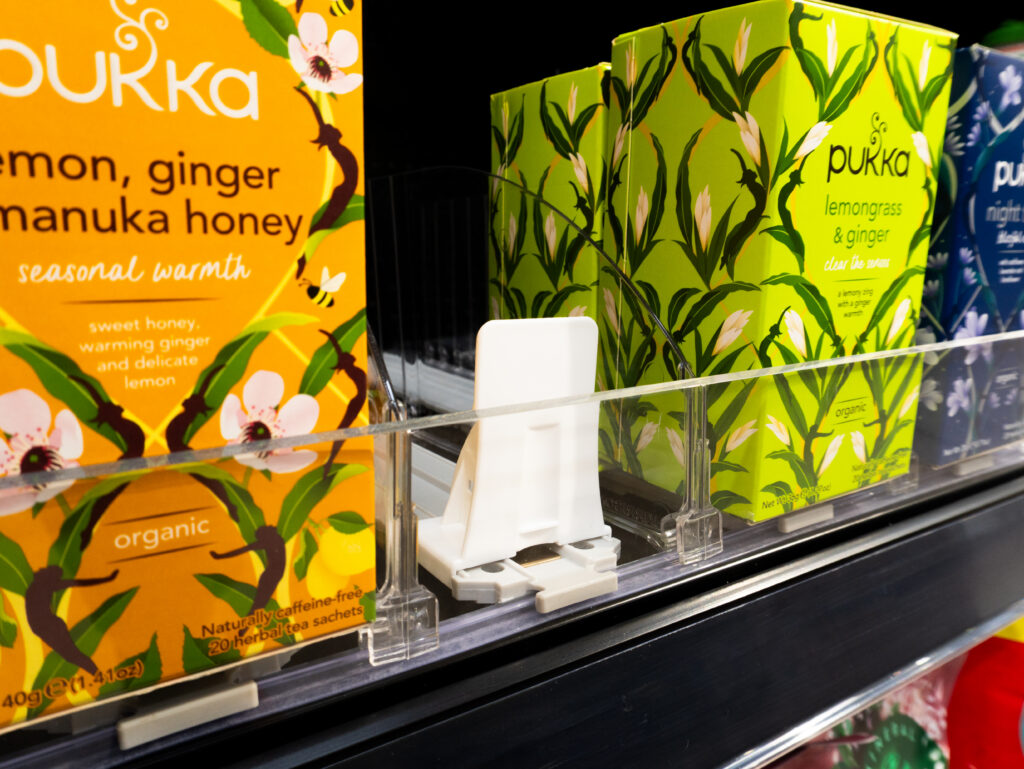
Most pusher systems are made up of three sets of components. You won’t always need every part, but it helps to know what each one does.
The pusher is a spring-loaded paddle that sits behind the last product in the lane. As products are taken, the spring draws the paddle forward and the rest of the stock moves with it. A flat pusher face suits boxed products, because it spreads the force evenly across the back of the pack.
Spring tension matters more than people expect. If it’s too weak, packs stop short of the shelf edge. If it’s too strong, customers struggle to lift a product out, light packs tip over and soft packaging gets squashed. The right spring depends on the weight and shape of what’s in the lane.
Dividers split the shelf into lanes, one per product line, and stop neighbouring products drifting into each other. Our breakable shelf dividers are made from transparent PET, so packaging stays visible, and their length adjusts in 25mm steps. The snap-off design means you can size them to the shelf depth in store without tools.
Divider height is worth thinking about. Low dividers make picking easier, while taller ones (we offer 60mm and 120mm options) give better control over tall or unstable packs.
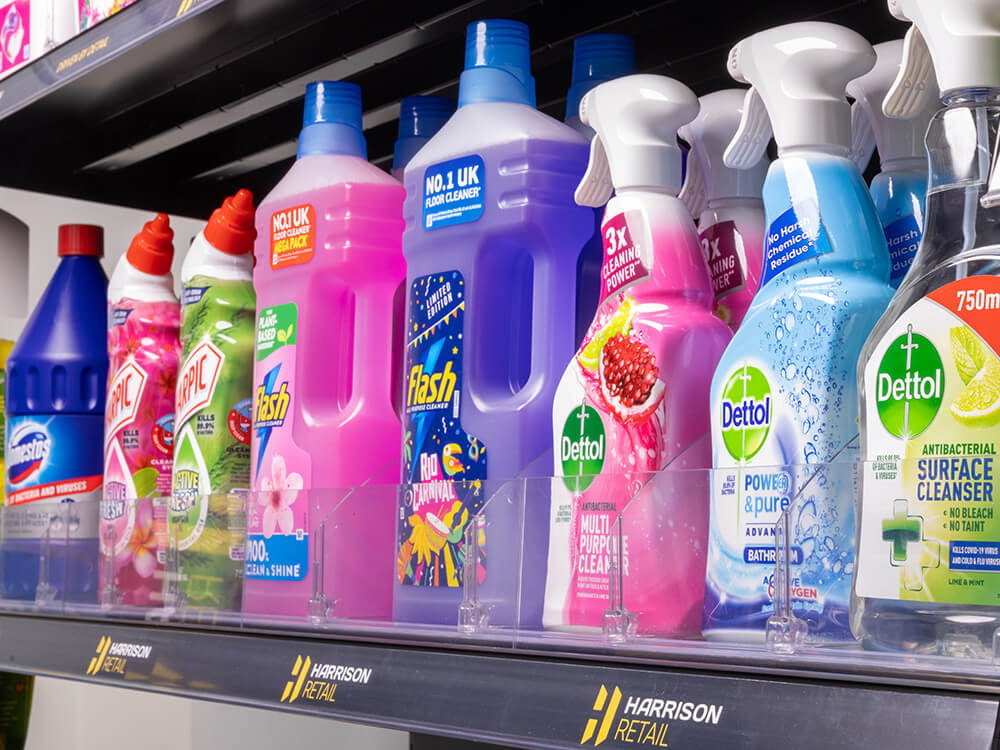
The whole system is anchored by a T-rail along the shelf front. Our T-rails are self-adhesive and magnetic, and front and rear clips hold the dividers in place, so most shelves can be fitted quickly without drilling.
If your stores use electronic shelf labels, the shelf edge has to do two jobs. Some of our ESL profiles include T-rails for pusher systems, so pushers and labels can share the same shelf edge. Our ESL Profile Guide has the full range, and we’ve also covered Which ESL Labels Work With Which Profiles.
Pushers work best where products sell quickly, come in uniform packs and need to look full all day. These are the areas where retailers use them most.
Chilled categories are hard to keep faced. Packs are often low and flat, time in the chiller is limited, and a gappy display can make fresh products look past their best.
When Morrisons needed a better way to keep its chilled fish displays full, we designed a low-profile, spring-loaded pusher to fit its existing fixtures. After a successful trial, it was rolled out nationally across Morrisons’ chilled fish displays. You can read the full Morrisons Fish Pusher Case Study.
For deli products, our Deli Pusher stays in place at the back of the shelf while staff restock, which makes replenishment quicker.
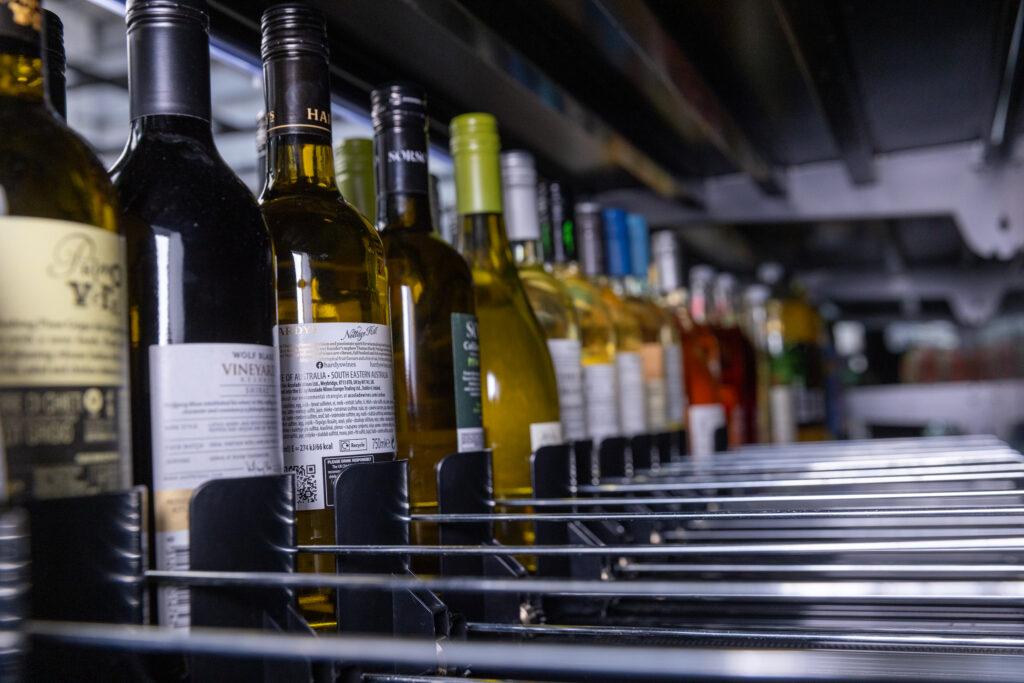
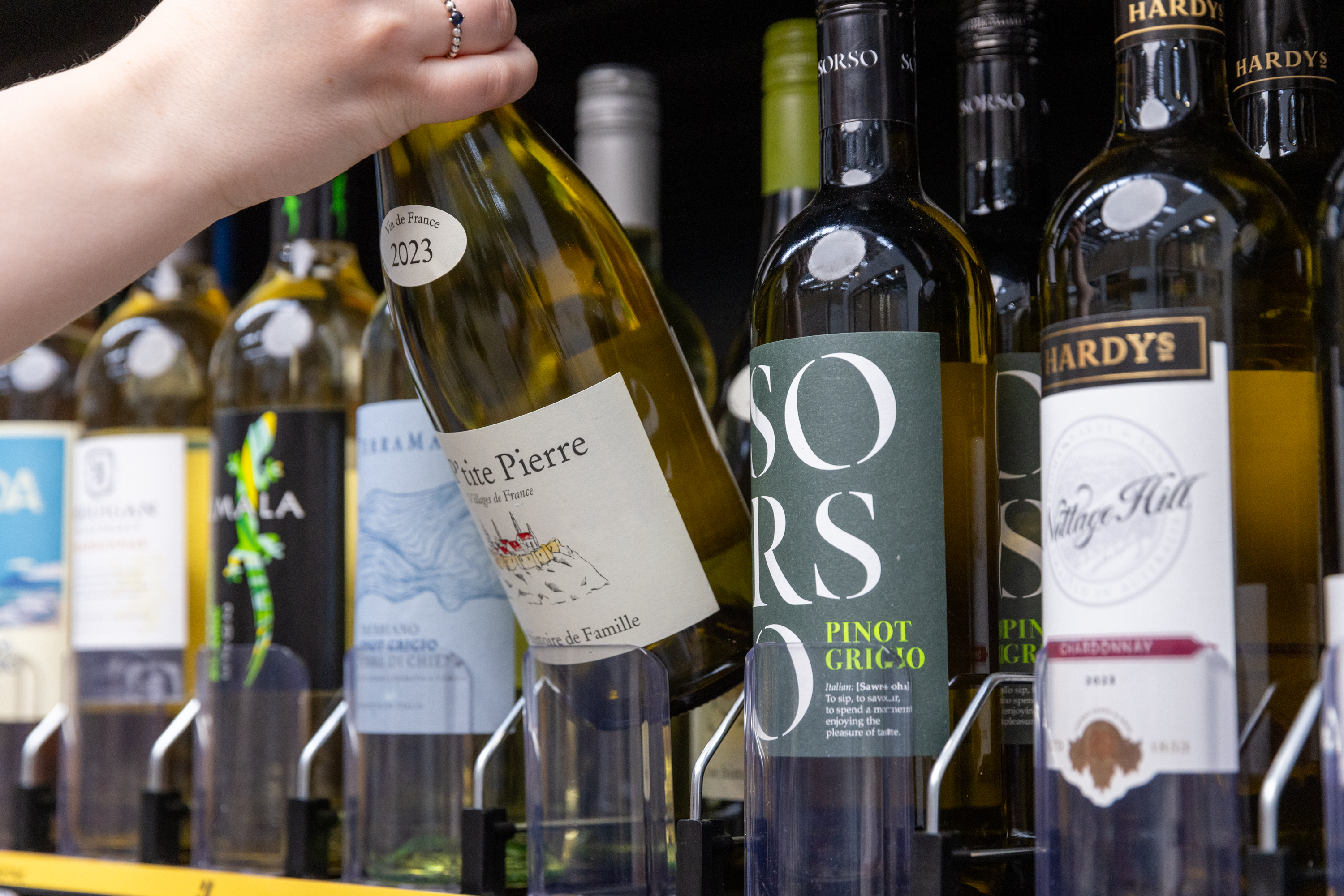
Bottles are heavy, easy to knock over and a common target for theft. The Slow Moving Wine Pusher keeps bottles lined up at the front of the shelf with a spring-loaded pusher, while a built-in riser stops shoppers sweeping several bottles off the shelf at once. It’s a good example of one fixture handling both merchandising and loss prevention.
Health and beauty products are small, high in value and easy to pocket. Here, pushers are often built into dispensers rather than used on an open shelf. Our Medicine Dispenser and One at a Time Dispenser both use an integrated pusher to feed products to the front, while limiting how many a shopper can take in one go. See the full Loss Prevention Range for more options.
Confectionery, batteries, phone accessories and small grocery lines turn over fast, often in smaller stores with fewer staff on shift. Pushers keep these shelves faced between deliveries, which helps when one colleague is covering both the till and the shop floor.
A spring pusher isn’t always the right choice. For heavy, flat-bottomed stock, our Roller Trays let a rolling surface do the work instead. We cover this in more detail in our guide to Gravity Feed Shelf Systems.
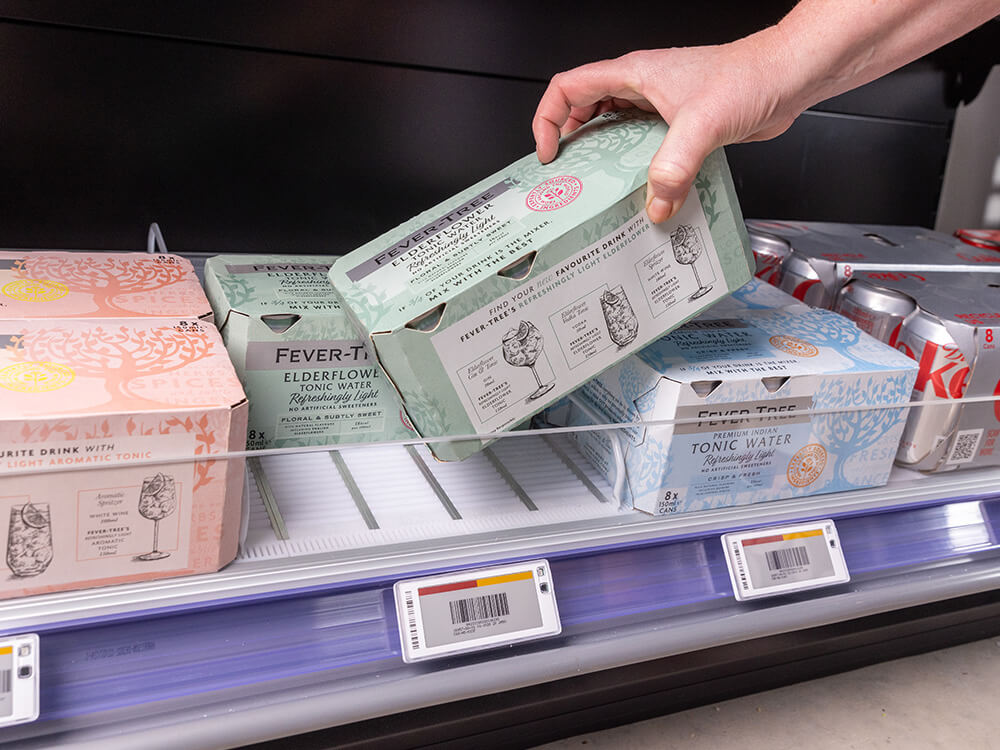
When shelves face themselves, staff stop doing laps of the aisle pulling stock forward. In one store that might save a few hours a week. Across a national estate, it’s a lot of hours, especially at peak times when the shop floor is busiest.
Products stay at the front, so the shelf looks fuller for longer and shoppers can see what’s on offer. Gaps become honest too: if a lane looks empty, it is empty, which makes on-shelf availability checks quicker and more accurate.
A pusher on its own won’t stop theft. Paired with a Shelf Riser or built into a dispenser, it lets you limit how many products are within reach while keeping the display full.
They aren’t the answer for every shelf. Slow-moving lines rarely drift far enough from the front to need one, and very large or irregular products can be awkward to fit. In those cases the cost per facing is hard to justify, and a simple riser or divider will do the job.
Spec sheets don’t always show how packaging behaves. Soft pouches, tapered bottles and boxes with overhanging lids all move differently. Test a handful of live products before you commit.
The pusher takes up space at the back of the lane, so each lane holds a little less than the full shelf depth. Factor that into your planograms and replenishment quantities.
Standard modular parts suit most ranges, and you can change divider heights and lane widths as categories change. For category-specific displays, like the Morrisons chilled fish fixture, a bespoke design may make more sense. We design and develop our fixtures in-house, so we can help with either.
Start with one high-volume category in a handful of stores. Track how often staff need to face up the shelf, how quickly it recovers after a busy period, and what customers and colleagues say. Then scale up with the evidence behind you.
Yes. Pushers are widely used in chilled cabinets for packaged meat, fish, dairy and drinks. Choose materials that cope with low temperatures, and check the system doesn’t block airflow.
A shelf pusher uses a spring to move products forward on a flat shelf. A gravity-fed shelf uses an angled shelf or roller surface, so products slide forward under their own weight. Gravity systems suit heavy, flat-bottomed stock, while pushers suit boxed and lighter products.
In most cases, yes. Self-adhesive and magnetic T-rails attach to standard metal shelves, so you can add a pusher system without replacing your fixtures.
They can. ESL profiles with built-in T-rails hold both the label and the pusher system on the same shelf edge.
Think back to that half-empty shelf at 3pm. The stock never ran out. It just ended up out of reach. A shelf pusher system keeps it at the front, so shoppers can find it and your team can spend their time on something else. Explore our Shelf Management Range, or talk to our team about trialling a pusher system in your stores