It is no secret that retail stores host strenuous conditions, leaving ESLs damaged by trolleys, customers, and falling products. Electronic shelf labels are expensive, and retailers must have the best POS defence solutions in place to protect them from irreplaceable damage.
In recent years, ESLs (Electronic Shelf Labels) have been viewed as the next big thing for accurate price communication and inventory management for retailers. The new technology can display centralised pricing updates on shelves, driving a surge in adoption. Recent studies estimate that the ESL market will be valued at $2.8 billion by 2028, with Europe holding the largest share of the expanding market.
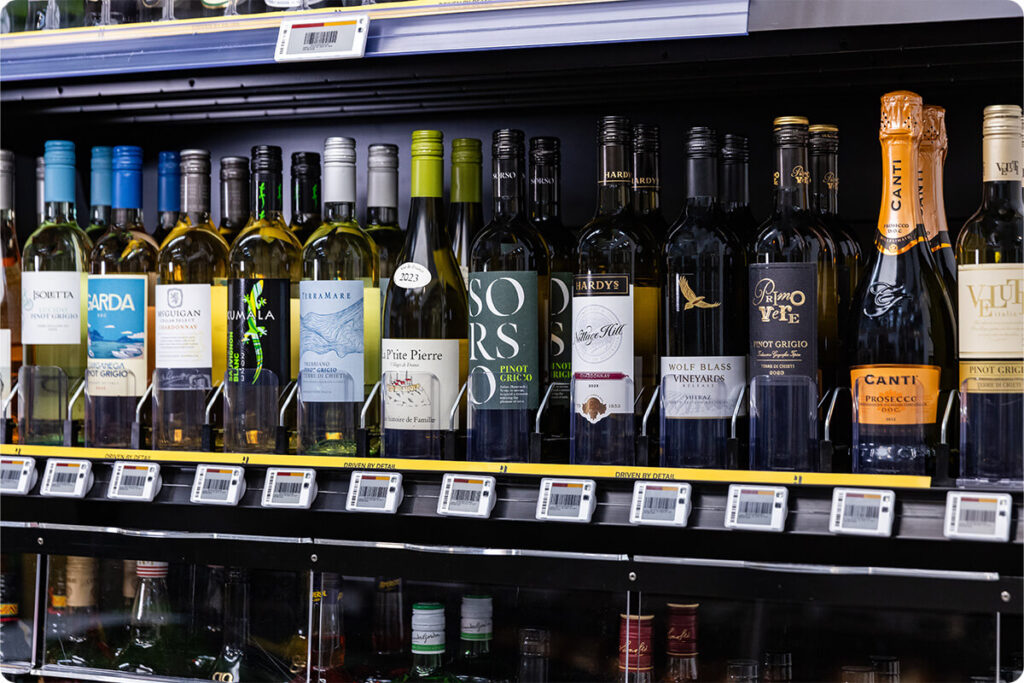
At Harrison Retail, we provide only the best POS ESL solutions to enhance and protect your ESLs from harm, ensuring they last and operate efficiently for years to come.
Increased visibility and durability
We pride ourselves on being the UK’s leading provider of profiles and accessories for ESL systems. We have the solution and accessories you need and partner with major ESL tag manufacturers to ensure the highest-quality, UV-stable systems for the retail industry.
Our hinged ESL rails are designed to enable retail staff to access the back of an ESL without risking damage and allowing retailers to angle an ESL to maximise price visibility for customers. Our rails are made from long-lasting, UV-stable, extruded plastic, elevating shopper experiences with sleek fixtures in line with modern displays.
We are already providing major international supermarket chains with complete store fit-outs. Our ESL management range is suitable for a wide range of ESL types.
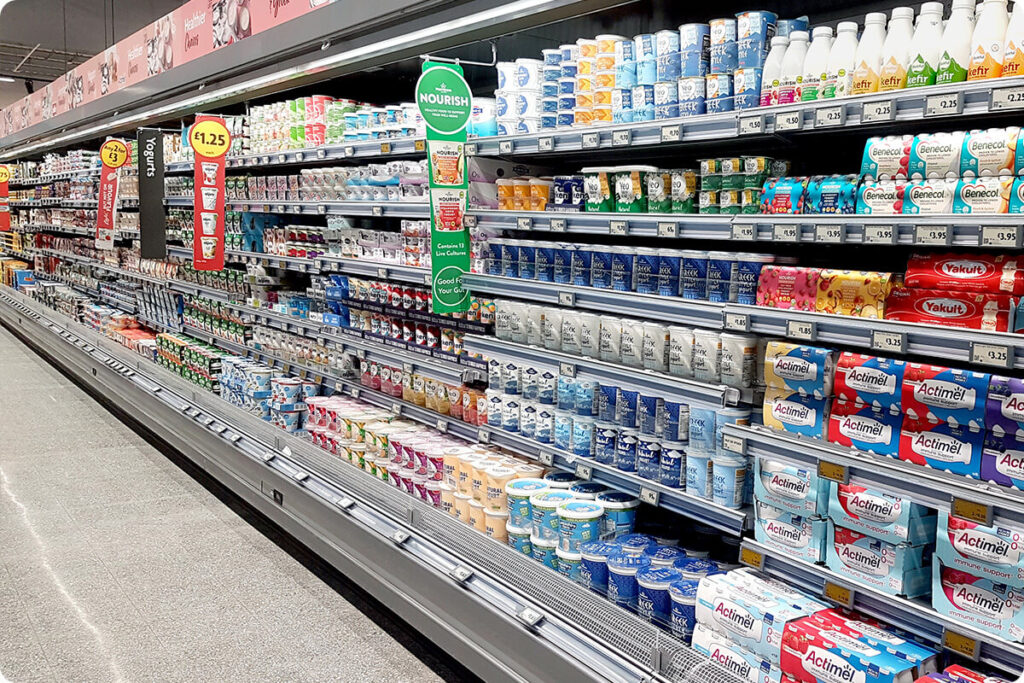
To explore our extensive range of existing ESL fixtures and accessories, browse our ESL profile guide.
Protecting ESLs from damage with bumper rails
To safeguard your ESLs from damage, we’ve designed state-of-the-art bumper rails. ESLs secured to the bottom of shelves are prone to damage in stores, especially during peak seasons. This can be resolved with bumper rails that repel any trolley damage, providing the unit with a longer lease of life.
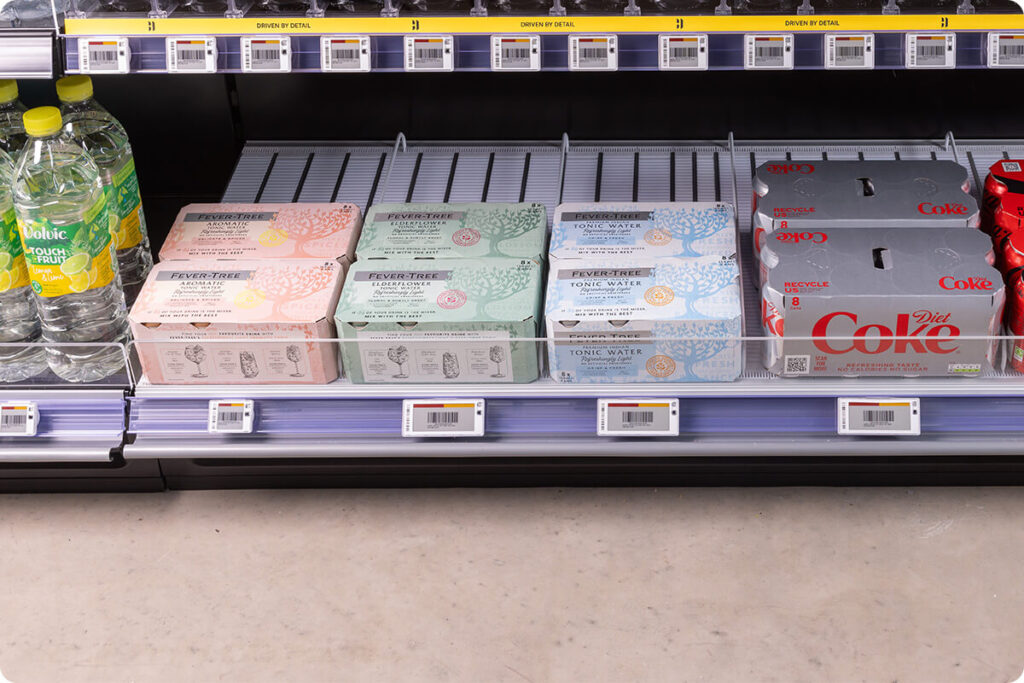
In combination with our hinged ESL rails, retailers can protect their applications from harm and enable staff to safely deploy and update ESLs without risking any loss on their investment.
If you would be interested in hearing more about how you can work with us to safeguard your ESL, watch our Working with Us video here.
Looking to the future
The ESL evolution is here, and retailers must integrate POS on-shelf solutions to safeguard new installations in-store. These new technological pricing innovations are a fantastic addition to the retail sector but are costly.
Recently, ESLs have been viewed as the next big thing for accurate price communication, and inventory management for retailers. While ESLs have been around for some time, innovations offer a greater variety of ESL form sizes, faster update speeds, higher resolution displays and better resistance to fluctuating temperatures in store. Modern ESLs can display additional insights such as nutritional/allergen information, stock updates, product reviews and different currency exchange rates.
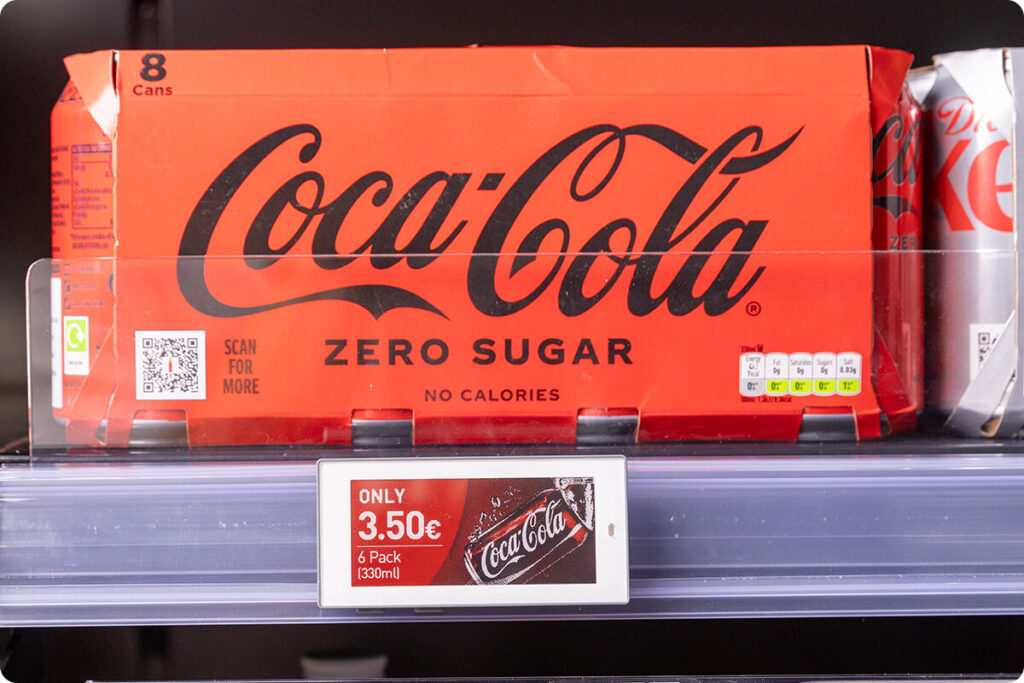
However, ESLs must have the best POS solutions to ensure that they last for years to come and are easily visible to customers, enhancing the customer experience overall. At Harrison Retail, we have worked closely with Pricer, providing them with ESL tags for their applications. These are on display in our brand-new showroom at our headquarters.
If you would like to visit our showroom to see our ESL application in action, contact us here or reach out to a member of our team at sales@harrisonretail.com to discuss your next project.
We’re less than two weeks away from our exclusive showroom event, tailored to key industry brands and grocery retailers, ‘Retail Resilience: Boosting Productivity Gains & Reducing Loss’. This event is aimed at offering key industry insights into solutions for some of the most pressing challenges currently faced in the retail sector, including theft prevention, rising costs, and productivity improvements.
Hosted by Harrison Retail, and spokesperson Simon Singleton, we have the great pleasure to be joined by leading retail expert guest speakers, Adrian Beck, Tim Bettley and Simon Hedaux.
With extensive experience across a variety of retail facets, you can read more about our guests below.

Simon Singleton | Spokesperson / Host
Singleton Consulting
Former COO H&B | Pepco Group UK
Formerly Chief Operating Officer at Holland & Barrett parent company and COO Pepco UK, previously Operations Director for Focus Wickes, Asda, George Clothing and Republic.
More recently, he has founded a successful retail advisory and consulting business, working with a diverse client base on a range of projects, from retail acquisitions, to innovative new format ideation, and development of retail tech innovation.

Emeritus Professor Adrian Beck | Guest Speaker
University of Leicester
ECR Retail Loss Group
He currently serves as an academic advisor and researcher for organizations like the ECR Community’s Shrinkage and On-shelf Availability Group. Beck is a frequent speaker at loss prevention conferences worldwide and a contributor to LP Magazine‘s US and Europe publications.

Simon Hedaux | Guest Speaker
ReThink Productivity
UKMTM Association
He is also a co-founder of ReTime Workstudy, a work study measurement and analysis app that simplifies and streamlines the data capture and reporting process, saving time and resources for our users.

Tim Bettley | Guest Speaker
Retail Consultant
Former Commercial Director | Poundland & Dealz.
Having also served as Commercial Director at The Original Factory Shop, and Managing Director of Peacocks, Tim has a wealth of experience in building and developing strong performing teams, used to operating in a large scale, high volume, fast-paced environments.
This exclusive industry event promises to be a valuable opportunity for attendees to engage in insightful discussions and participate in Q&A sessions. With a mix of fireside chats, practical workshops, and extensive networking opportunities, participants will connect with industry peers, brands, and top-tier grocery retailers, whilst gaining actionable insights into loss-prevention innovations.
Attendees will also receive an exclusive action plan summarising the key takeaways from the day, designed to accelerate their loss-prevention strategies.
Register Now
Interested in attending? Simply RSVP here to secure your spot. If you can’t join us in person, no problem – our fireside chat with Simon Singleton will be available via live stream. RSVP online to receive the webinar link and join us virtually.
At Harrison Retail, sustainability isn’t just a part of our business – it’s at the core of our strategy. We’re committed to fostering an environmentally conscious approach both within our organisation and in the solutions we provide to our clients. Our green retailing goals are driven by clear environmental objectives and targets, designed to inspire lasting change.
Ethics in Action: Our Partnerships and Accreditations
We take pride in our Gold rating from EcoVadis, a globally recognised sustainability ratings provider. This distinction reflects our commitment to integrating robust sustainability practices and managing our corporate social responsibility effectively.
We also hold key accreditations from the International Organisation for Standardisation, which reflect our dedication to high standards:
- ISO 14001:2015 for our effective environmental management system
- ISO 9001:2015 for our unwavering commitment to quality management
- ISO 27001:2022 for safeguarding company and client data
Environment: Pushing for Sustainability
At Harrison, we are sustainability driven. That’s why we’re pioneering 100% biodegradable solutions with our EcoVision range. Using a modified plastic polymer, our EcoPlastic components are 100% recyclable and biodegrade at a much-accelerated rate, breaking down into natural compounds if they accidentally end up in landfill. We also offer data strips made with up to 30% recycled content, supporting a circular economy in our industry.
Our commitment to reforestation is realised through our partnership with One Tree Planted, with 5,900 trees planted to date and counting. Every month, we contribute at least 100 more trees, helping restore ecosystems and provide jobs for local communities.
In support of cleaner oceans, we work with The Ocean Cleanup to capture and repurpose plastic from the world’s oceans, doing our part to reduce ocean pollution.

Driving CSR for a Sustainable Future
As a predominantly plastic-based business, we’re acutely aware of our environmental impact. We’re on a path toward Net Zero by 2050, aiming to cut CO2 emissions by 39 tonnes per year over the next six years, culminating in a total reduction of 234 CO2e.
Since 2020, we’ve partnered with Carbon Quota to measure, reduce, and certify our carbon footprint. Our dedication has led to our status as a certified carbon-measured operation, continuously advancing our sustainability efforts.
We are also innovating in recycling through our open-loop program, where we collect used data strips from retail stores and recycle them into new products with 30% recycled materials, significantly reducing our dependence on virgin plastic.
To reach our reduction goals, we’re implementing practical measures like car sharing, renewable energy adoption, and promoting sustainable business travel—each step saving valuable CO2 emissions along the way.
To learn more about our CSR initiatives and green retail strategy, please get in touch with us at sustainability@harrisonretail.com or see our CSR report here.
In the ever-evolving landscape of retail, businesses face an ongoing challenge: theft. Despite implementing additional security measures such as extra guards, security barriers, employee body cams and even the use of dummy products on shelves, the issue of stolen goods continues to plague the industry.
This problem has been exacerbated recently by the effects of a post-pandemic economy now facing a cost-of-living-crisis. As a result, the industry is turning to forward-thinking companies, like Harrison Retail, to innovate POS and display solutions for loss prevention.
The cost-of-living crisis and theft
The cost-of-living crisis has had a profound impact on communities worldwide, pushing some individuals to resort to theft as a means of survival. While this issue remains complex, it underscores the importance for retailers to take proactive measures to protect their assets. By investing in innovative shrinkage-reduction, businesses can mitigate the impact of theft while maintaining a secure and welcoming shopping environment.
Theft in retail is a persistent issue that is costing the retail industry billions each year. Despite retailers’ best efforts to enhance security, determined thieves find innovative ways to exploit vulnerabilities. The cost-of-living crisis has only exacerbated this problem, pushing some individuals to turn to theft as a means to cope with financial hardships. Retailers are now tasked with finding more efficient and effective solutions to protect their inventory and bottom line.
We are seeing more and more retailers introduce additional loss prevention measures such as:
- extra guards, security barriers and body cams for employees,
- facial recognition systems to flag known shoplifters,
- ‘dummy’ packages displayed on shelving to be swapped for the actual product by staff members at checkout,
- and – as reported by the Daily Mail – a south London Sainsbury’s, once the chain’s biggest supermarket in the country, is set to shut later this year with staff revealing that rising theft factors highly in the decision to close.
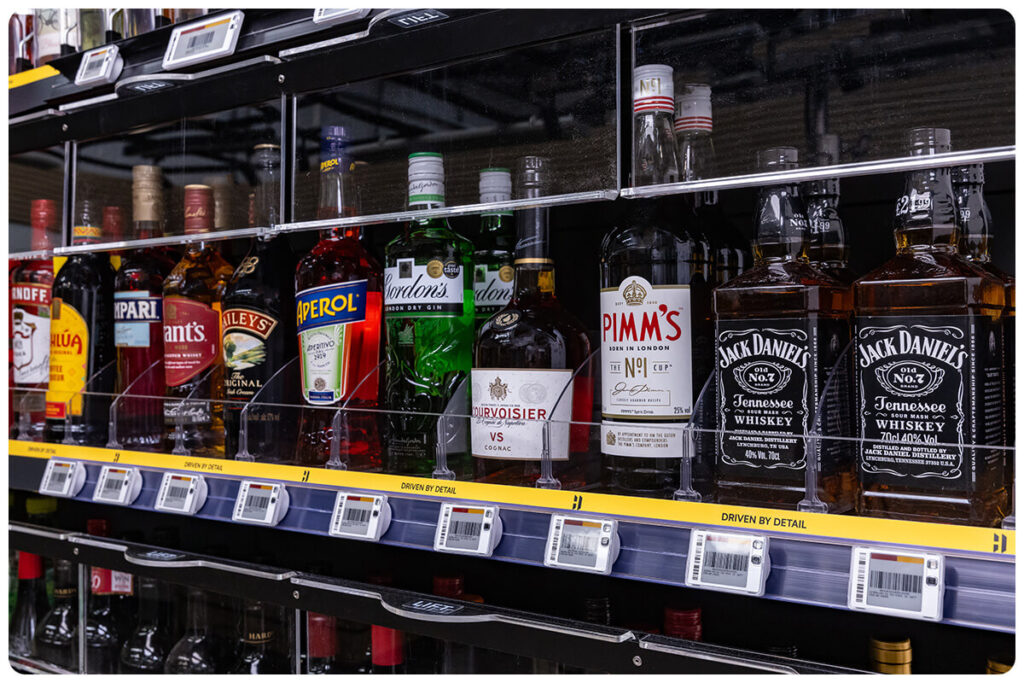
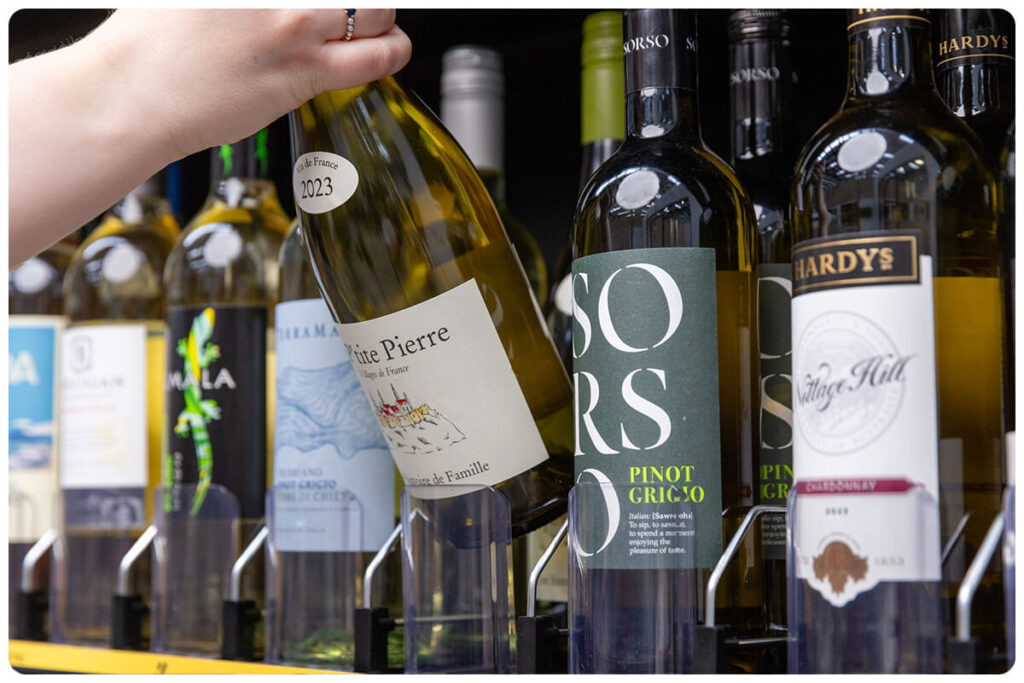
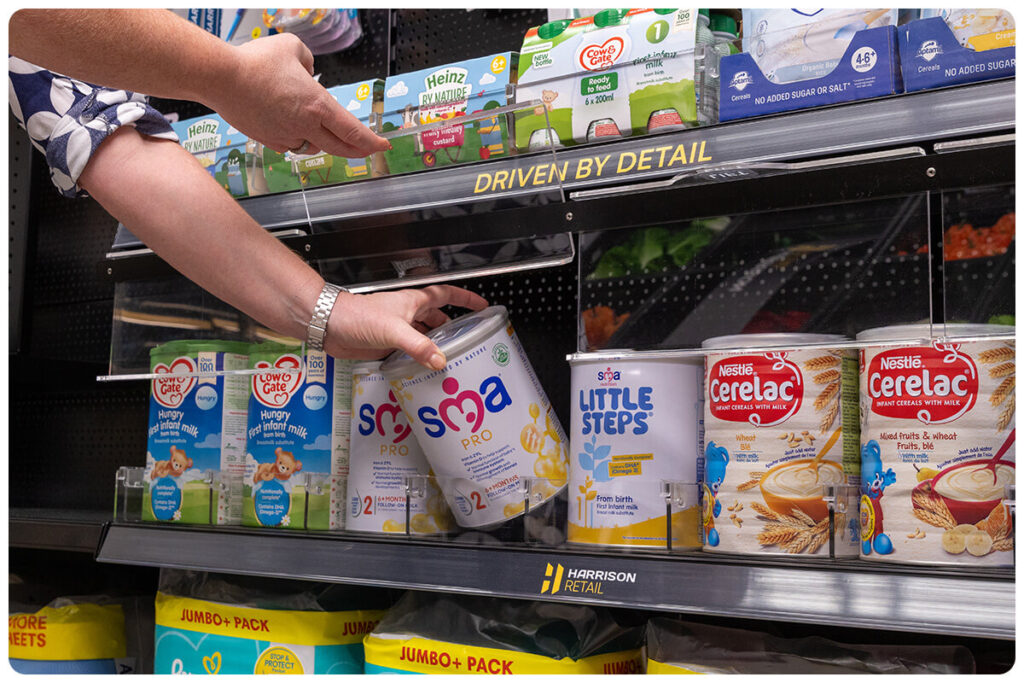
We’ve always been used to high value items such as alcohol having security protection; however, we’re now seeing everyday items, baby formula, duvets and suncream, displayed in stores with this extra level of security.
The British Retail Consortium recently reported that:
“incidents of theft have increased by 27% across ten of the largest cities in the UK, with some cities up as much as 68%. The nature of these crimes has changed, with perpetrators becoming bolder, and many retailers reporting increasing links to organised-crime activity.”
The full report can be found here.
Adapt and evolve with anti-theft innovations
As the cost-of-living crisis persists, it is imperative for businesses to adapt and evolve. By embracing innovative solutions, retailers can safeguard their assets, enhance the customer experience and continue to thrive in a challenging retail landscape.
Here at Harrison Retail, we are leading the charge in combating theft by developing cutting-edge point-of-sale and product display solutions designed to limit product accessibility, making theft attempts more difficult and reducing stock shrinkage.
Douglas Cook, our in-house Product Development Manager, states:
“We are seeing a dramatic increase in requests for anti-theft and loss prevention solutions across our retail client base. It is clear that the industry is facing a real challenge and looking to the most innovative suppliers who are able to react to this problem effectively and efficiently; which is why we continue to prioritise research and development in anti-theft solutions at Harrison.“

Leading the market to new innovation
Our innovation and product design experts are working with large supermarkets and cosmetics stores throughout the UK to innovate new loss prevention systems which are currently being trialled in multiple stores.
Our commitment to revolutionising retail security aims to serve as an example for the industry as a whole, paving the way for a more secure and prosperous future for the retail industry.
Get in touch with us today to discuss your store’s vulnerability to theft and explore how we can develop a tailored solution to reduce your stock shrinkage. Email sales@harrisonretail.com and one of our team will get back to you.
The e-commerce sector has grown exponentially in recent years, with an anticipated 2.71 billion buyers in 2024, however, brick and mortar shopping still account for 85% of total spending in the retail market. In the face of such demand retailers must craft innovative, in-store experiences with creative strategies to attract and retain customers in today’s high-demand market.
Constant shifts in consumer behaviour highlights the crucial role that adaptable shelf management solutions play in optimising product visibility, supporting an increase in sales and more broadly, maintaining competitiveness in a crowded market. In fact, 43% of shoppers are more likely to spend money with a retailer who offers a meaningful in-store experience. Shelf management equips retailers with the tools to create a unique and positive brand image, fostering long-term, repeat business relationships with customers.
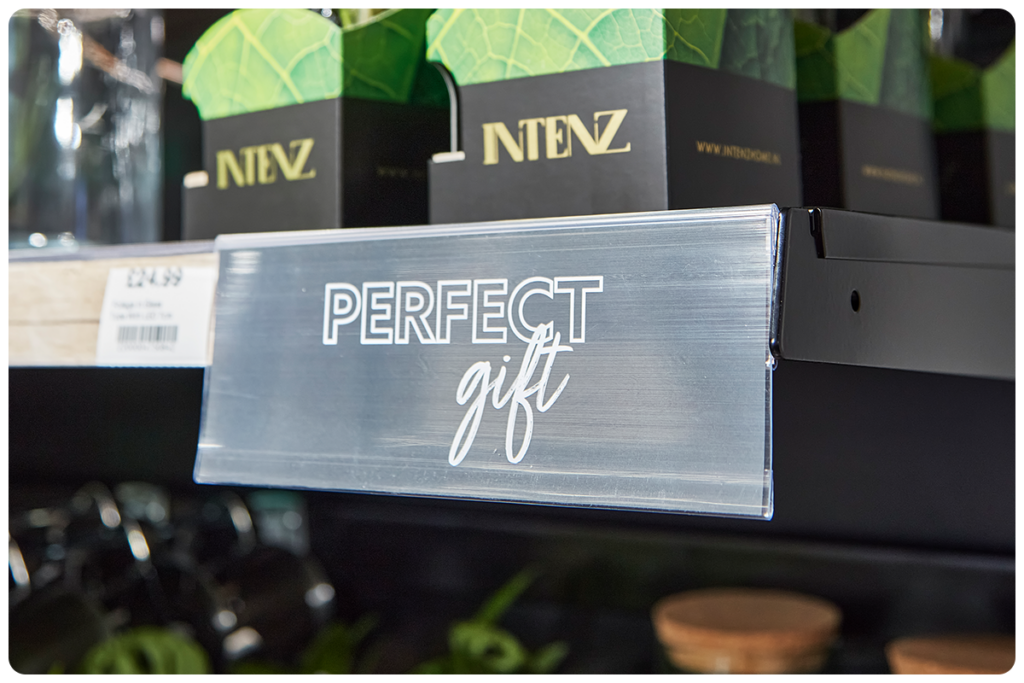
The Importance of Shelf Management
A common misconception is that shelf management is primarily about how products are arranged. When in fact, retailers need to ensure product placement remains consistent, products are well presented, shelf space is optimised and loss prevention is taken into account, ultimately playing a part in delivering a positive shopping experience.
Although the customer is always the priority, retailers and their employees are also reaping the benefits of innovative shelf management solutions. T-rails and dividers, for example, streamline display assembly, enhance shelf organisation, and expedite restocking processes, reducing time consuming tasks and staffing requirements.
Regardless of who stands to gain, shelf management is establishing itself as a crucial element of modern retail operations. The result directly influences and impacts the experiences of both customers and employees, unified in their desire for effortless store navigation and improved product accessibility.
Innovative Shelf Management Solutions
T-rails used at the front and rear of shelving offer a tailored shelf management solution, featuring PVC rails that vary in length and are self-adhesive for easy installation. This enables retailers to customise shelf configurations to suit their needs, while adjustable breakpoints and clip-on dividers keep products of all shapes and sizes organised to optimise shelf space and enhance product visibility.

Offering an appealing aesthetic, breakable shelf dividers serve as both effective and visual complimentary additions to t-rails. A transparent yet durable and versatile design, featuring break points every 2.5cm makes them highly adjustable, while in-shelf barriers prevent product displacement and enable efficient restocking. Their transparent design presents customers with an uninterrupted view of products, making it easier for shoppers and employees alike to access products.
At Harrison, we understand that shelf management is not a one size fits all solution and that changes to store layout and shelf space is a continuous process. This is why our selection of tailored t-rails feature magnetic tape variants to enable easy movement of divers between shelves, offering quick adjustments to allow for changing products or promotional displays.
Curating a Compelling Shopping Experience
Retailers worldwide are navigating the challenges of customer demand and expectation for efficient and meaningful shopping experiences. Ensuring shelves are organised, well stocked and provide optimum product visibility is now a non-negotiable regardless of the store size, layout or goods. Recognising this, it is essential that retails employ a selection of high-quality shelf management solutions to support in-store enhancement, elevate product displays and ultimately deliver a compelling shopping experience.

Get in touch with us today to discuss your shelf management requirements and explore how we can develop a tailored solution to suit you and your project. Email sales@harrisonretail.com and one of our team will get back to you.
A recent report from the British Retail Consortium has stated that criminals are ‘being given a free pass’, with thefts more than doubling to 16.7 million incidents last year and the cost of retail crime rising to 3.3 million. It is clear that retailers must be proactive and actively put solutions in place to battle back against theft.
Co-op, which hosts over 2,500 stores across the UK, saw a 44% surge in retail crime last year and in response has resorted to installing 200 secure till kiosks, locked cabinets for bottles of spirits and AI technology to monitor its self-checkouts.
To overcome the ongoing threat of theft, retailers can adopt point-of-sale (POS) and bespoke display solutions to help combat loss.
Limiting product accessibility and shrinkage with store fixtures
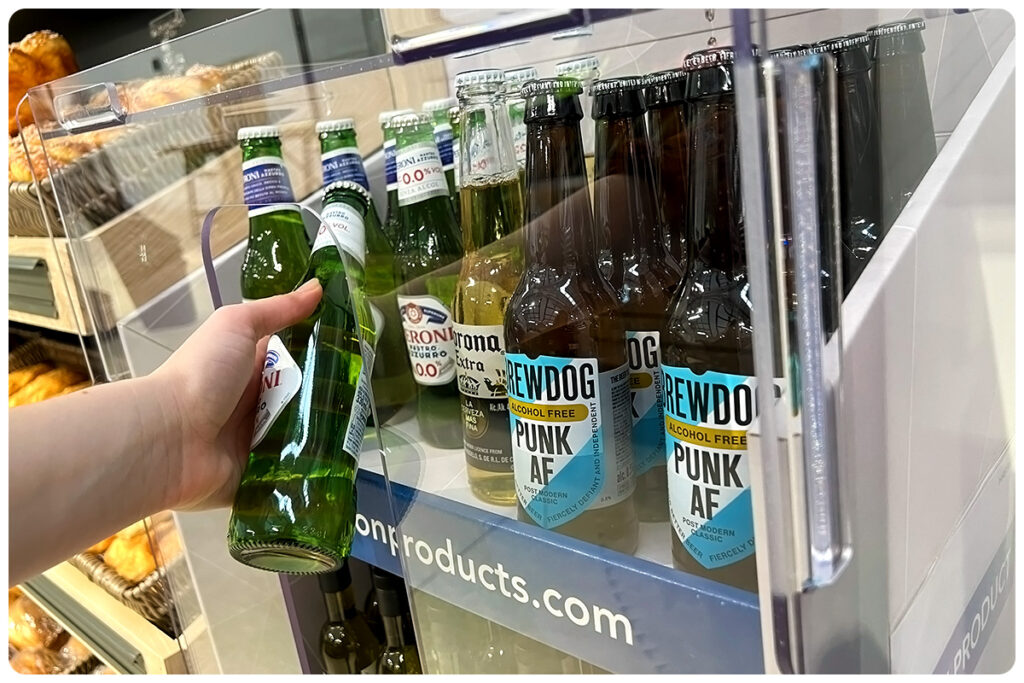
Anti-theft merchandising solutions are a great option for retailers; designed to limit product accessibility, making theft attempts more difficult, and reducing stock shrinkage. This includes products such as anti-sweep hooks designed to limit accessibility, making attempts at theft far more challenging and reducing stock shrinkage, as well as bespoke designed shipper surrounds to limit the number of high value items, such as alcohol, that can be removed from temporary display units at a time.
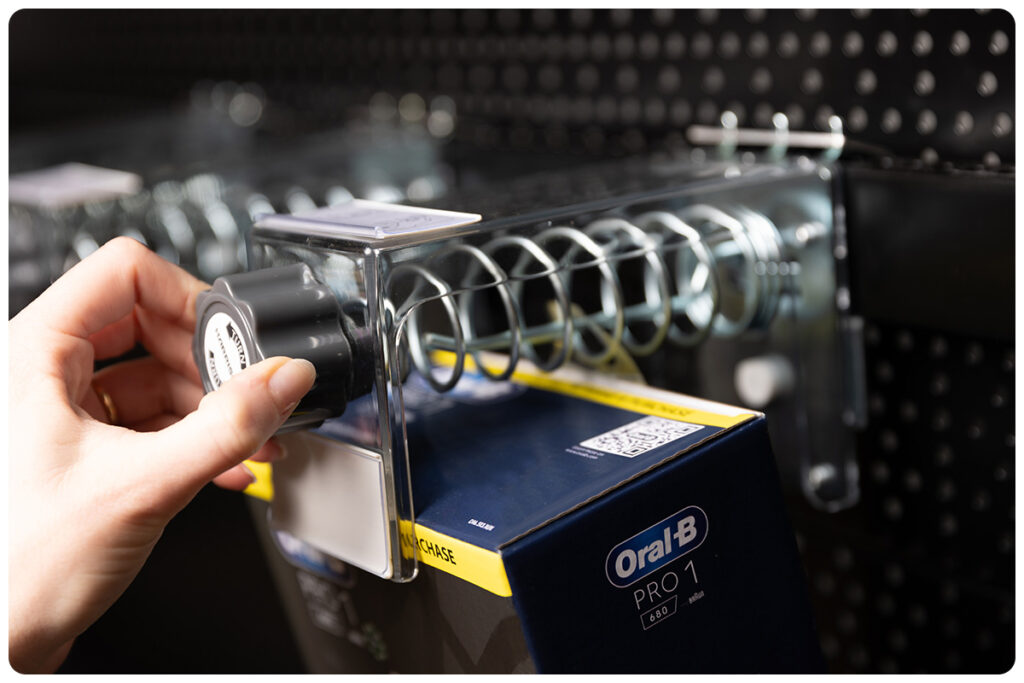
However, it’s important to consider that every retail shop is different, hosting different loss prevention plans due to different product types sold and the branding and imaging of each retailer differing. Therefore, retailers must identify the right designer and producers of display fixtures which can provide a tailored approach to theft prevention solutions.
At Harrison, we provide a range of bespoke anti-theft store display fixtures and merchandising solutions, including stock limiters, shipper surrounds, and shelving systems to enhance store security.
By implementing POS and display solutions such as anti-theft hooks, shipper surrounds, and stock limiting systems, retailers can not only protect their high-value goods and increase profitability but also create a safer, more inviting shopping environment for customers.
Developing a system that deters stealing
It is important to recognise that bespoke display fixtures are just one of many ways retailers can help prevent theft and to develop a balanced system that deters stealing, retailers must install a combined approach.
Adopting intelligent analytics is the best next step, as it can detect unusual behaviour, prompting real-time alerts. Analytics recognise patterns, movement and specific objects or behaviours, delivering insights beyond video footage.
Other solutions include the addition of more security guards, an increase in EAS systems and RFID tags, facial recognition systems, and signage displaying the consequences of theft.
Your loss-prevention partner
Our forward-thinking and proactive approach to projects is why retailers are turning to us to combat stock shrinkage. We don’t simply offer products; we collaborate with our clients by understanding your unique challenges. From concept to completion, we will tailor solutions that work for you.
Specialising in three focal areas: beers, wines, and spirits; healthcare and beauty; and household, we’re tackling the sectors facing the highest rates of theft.
We have developed fixtures and systems that limit accessibility to high-value merchandise and minimise the volume of product that can be removed from displays. Some systems even incorporate sound-emitting features, acting as deterrents for thieves.

By partnering with Harrison, you are investing in the future success of your business. Our expertise and creativity ensure that your merchandise is protected, and your profits secure.
So, are you ready to regain control of your retail environment? Contact our team of experts today to discuss your brief. Email sales@harrisonretail.com or call us on +44 (0)1451 830083.
A key challenge retailers are facing in 2024 is inaccurate pricing on product shelf labels, which often leads to customers disputing the price of items at the checkout.
Pricing discrepancies cause delays at the checkout and can deter customers from returning, shifting their brand loyalty. To resolve this, retailers can deploy ESLs, which can be updated in real-time, to eliminate manual process and ensure pricing accuracy.
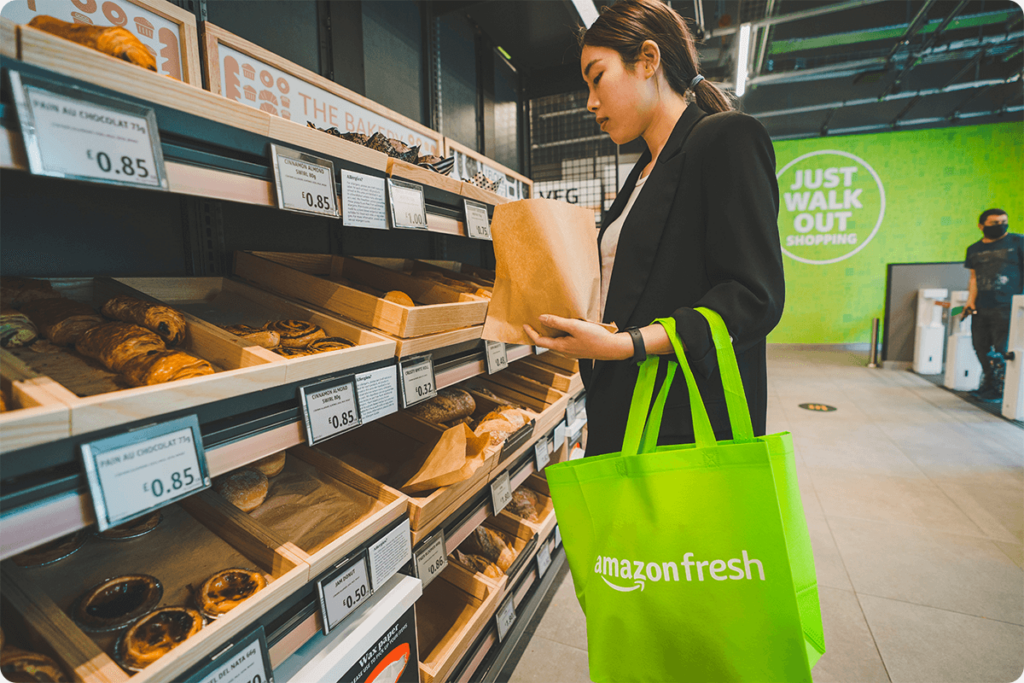
Shelf Edge Technology – New Innovations
While ESL’s have been around for some time, new innovations offer a greater variety of ESL form sizes, faster update speeds, higher resolution displays and better resistance to fluctuating temperatures in store.
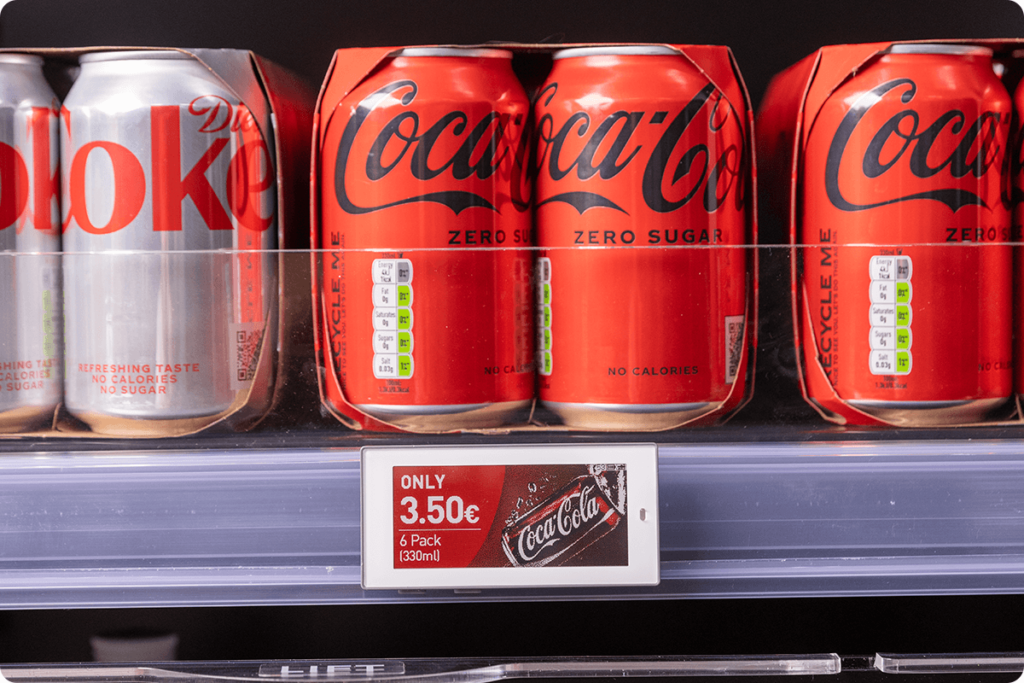
Modern ESL’s combined with Near Field Communication (NFC) and Quick Response (QR) codes go beyond displaying simple pricing information. Now, they can display additional insights such as nutritional/allergen information, stock updates, product reviews and different currency exchange rates.
This information can go a long way towards improving the customer experience, and ultimately, bolstering loyalty to a particular brand.
Sustainable Benefits
It is estimated that 180,000 tonnes of label waste is sent to UK landfill sites each year. However, the digital nature of ESL’s eliminates the need for paper labels and printers in-store, enhancing sustainable output.
Additionally, ESLs can now display a range of sustainable information about carbon footprint, energy rating, recycling, and source materials, allowing consumers to be more aware of the environmental impact of their purchase.
Working With Us
Partnering with Harrison Retail allows you to leverage our global network of in-house manufacturing, warehousing sites, and robust supply chain.
To explore our extensive range of existing ESL fixtures and accessories, browse our ESL profile guide or reach out to a member of our team via sales@harrisonretail.com to discuss your next project.
In a bid to encourage healthier shopping and eating habits, last year’s introduction of High-Fat, Salt, and Sugar (HFSS) regulations have been a major focal point in the retail industry. One year on, we’re exploring how this change has impacted retailers and consumers despite leading non-HFSS-compliant brands reporting average sales hikes of 27%.*
*According to new data from Reapp.
What is HFSS?
Prior to the government stepping in to introduce restrictions, the retail industry was often misaligned with existing government healthy eating guidelines, subsequently making it harder for families to make healthier choices when shopping.
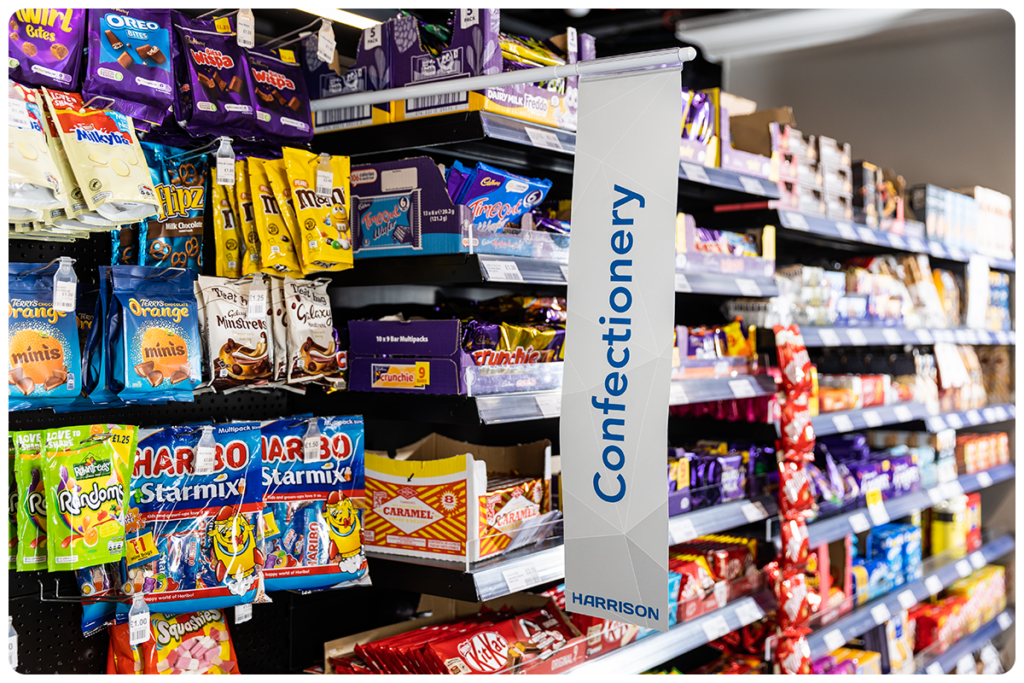
This led to the development of regulations for restrictions on the promotions and placement of certain foods and drinks that are high in fat, salt or, sugar (HFSS).
Following consultations in 2019, the government introduced legislation to “restrict the promotion of HFSS products by volume price (for example, ‘buy one get one free’) and location, both online and in-store in England.”
HFSS is also known as less healthy food and drink and is referred to as such in the nutrient profiling technical guidance 2011. The restriction of HFSS products by location came into force on 1 October 2022 and the restriction by volume price will be effective from 1 October 2025.
How is HFSS regulated?
HFSS regulations have evolved substantially since the initial consultation in 2019. Various countries, including the UK, have introduced measures to tackle the prevalence and promotion of unhealthy food and drinks, aiming to restrict the marketing, advertising, and sale of HFSS products to consumers.
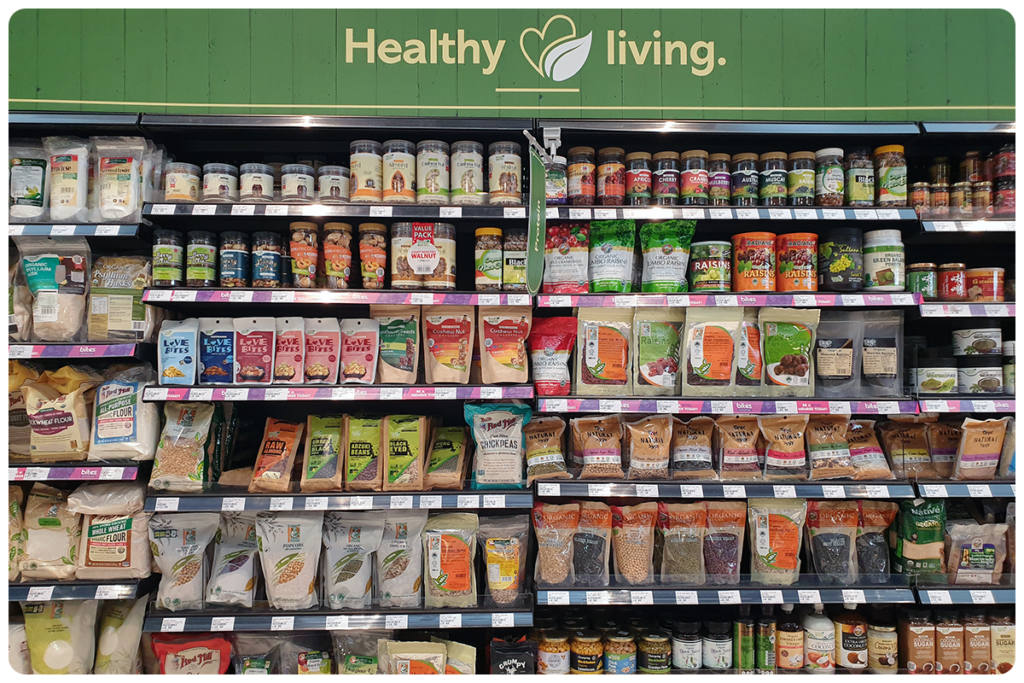
The UK’s HFSS advertising ban, which has been delayed from a 2023 enforcement to October 2025, has compelled retailers and manufacturers to reevaluate their product offerings and marketing strategies. This shift has led to a wave of product reformulation, with many brands working to reduce the HFSS content in their products to comply with regulations rather than face promotional restrictions.
Are brands and retailers noticing the impact?
With retailers being forced to reimagine their in-store layouts, product placements, and promotional strategies, brands have also had to adapt to the restrictions to maintain growth.
Despite HFSS regulations and price inflation, sales of chocolate saw an additional £50 million over the past year along with chilled desserts boasting a 75% sales hike since the laws came into effect.
Whilst it’s clear to see these key impulse purchase zones hosting healthier options such as snack bars, these items have seen no benefit from the regulations, with a less than 1% increase in sales.
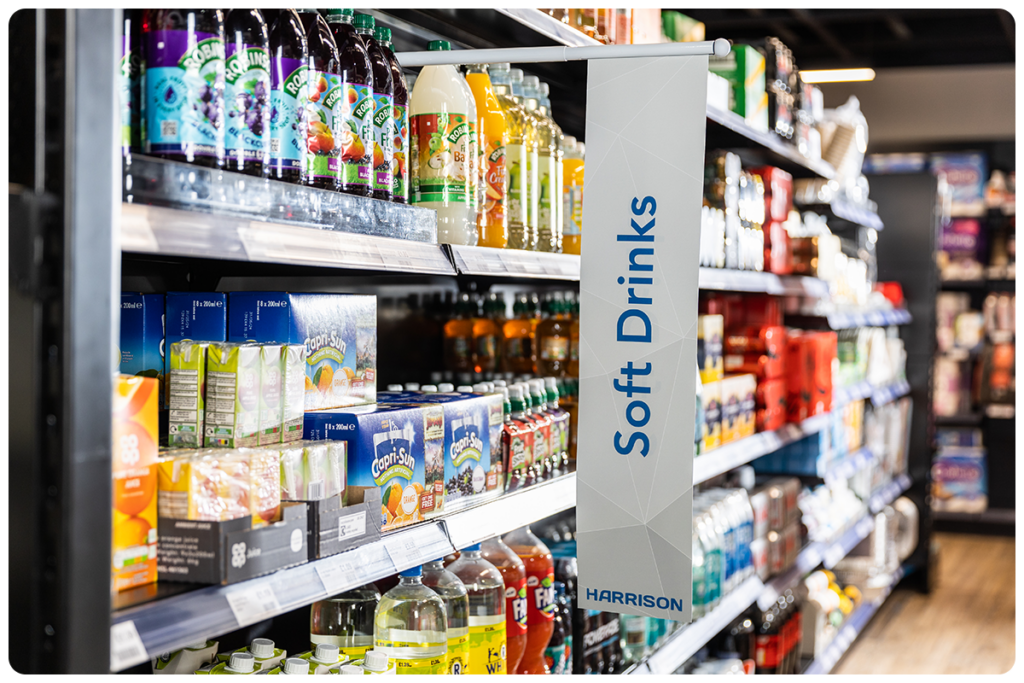
Commercial Director at Reapp, James Lamplugh, reports that “our latest in-depth analysis shows flavour, taste, and experience unequivocally remain the top factors in understanding what drives consumer trends.
“Brands have demonstrated real skill in adapting to legislation to deliver growth. Retailers too have been savvy with their promotion to retain customer loyalty.
“Not only this, with inflation and the cost-of-living crisis being huge factors in our lives, consumers found themselves staying at home more, driving the ‘Big Night In’ trend where we see shoppers treating themselves to little luxuries such as chocolate and confectionery.”
How can we help?
Whilst HFSS regulations are reshaping the classic supermarket layout, here at Harrison our product development team design innovative display solutions and store fixtures designed to promote healthier product options as well as supporting the promotion of non-HFSS-compliant products and brands.

So, are you a retailer looking to increase impulse sales of HFSS-compliant products? Or a non-HFSS-compliant brand struggling to get noticed in-aisle?
Then get in touch with our team today, or email sales@harrisonretail.com, to explore how we can support with your store promotions and merchandising systems.
In an exclusive interview with industry expert and Head of Procurement, Mark Adams, we delve into the world of sustainable retail display and merchandising fixtures. As global retail experts, Harrison is at the forefront of the sustainable revolution in the industry.
This article explores our commitment to sustainability, the growing need for recycled, recyclable, and compostable materials, and the balance between cost-effectiveness and innovation. Mark Adams provides insights into the products currently available and those in the pipeline, highlighting the challenges and opportunities in creating eco-friendly customer solutions.
Pioneering Sustainable Display Solutions
“We are working tirelessly to provide innovative sustainable solutions. However, differences in supplier capability, materials availability, and price points exist from supplier to supplier, and country to country; therein lies the challenge.” – Mark Adams.
Here at Harrison, we are spearheading the movement towards fully sustainable options. In this exclusive conversation with Mark, we unravel the challenges of achieving sustainability and explore whether compromise can be avoided between sustainability, innovation, and cost-effectiveness.

Since his appointment in January 2023, Mark has helped champion sustainable solutions within the company, spearheading a progressive and robust quality programme that’s growing with the business.
With the implementation of a Quality Planning system and a Quality and Compliance Division which incorporates Environmental, Social, and Governance (ESG) oversight, the entire Harrison team are behind the changes and continue working towards the larger company vision together.
Recycled, Recyclable, and Compostable
Harrison understands that sustainability requires a multi-faceted approach which begins with the materials used. This is why our innovation teams are focused on researching and developing a wider range of recycled, recyclable, and compostable materials to enhance our sustainable offering for clients.
Recycled display products and solutions are made using a material that is recovered from a used product and reprocessed into new fixtures.
Recyclable ranges are crafted using materials that can be recovered at the end of the product life and reprocessed for further use elsewhere.
Compostable products will rapidly bio-degrade into harmless natural elements if accidentally placed in landfill.

By reducing conventional plastic use Harrison is making significant strides in minimising the environmental impact of their products for their customers.
Challenges
Mark Adams shares that our Product Development department is actively exploring new proposals using a variety of recycled materials. However, he acknowledges the challenge of balancing sustainability with aesthetics because “there’s currently a compromise to be had with aesthetics. Recycled plastic materials tend to lack a little of the shine or lustre associated with virgin plastics.”
This highlights the inherent tension between creating eye-catching displays and eco-friendly solutions which is why our teams are working to resolve this issue through innovation.
It is vital when developing high-quality sustainable solutions to eliminate the trade-off between sustainability and cost-effectiveness. As Mark notes, the current order of technical capability is often inversely related to cost-effectiveness.
He notes: “Achieving high sustainability cannot be at the expense of cost effectiveness. This presents a significant challenge for businesses like Harrison, who aim to balance both aspects effectively for each customer.”
Future Plans for Sustainable Service Offerings
The ultimate aim in the retail industry is to provide display solutions capable of continuous recycling and reprocessing within a closed loop system. Used products will be collected from clients at the time of delivering new stock ready to be recycled and reprocessed into new products.

Whilst this ultimate goal may be a little out of reach at present, requiring advances in technology and logistics, here at Harrison we are actively exploring closed-loop offerings by working with innovators in the field, reinforcing our commitment to remain at the forefront of sustainability and innovation.
Committed to Continued Improvement
Prioritising sustainable offerings alone is not enough. As a business, we have always been aware of the impact we have on the environment and continue to take appropriate steps to mitigate that impact, including setting environmental objectives and targets, implementing procedures and providing training so that our team members understand their environmental responsibilities and can seek to improve environmental performance.
To fully demonstrate our commitment to reducing our environmental impact, we hold the following accreditations:
- ISO 14001: This environmental management certification demonstrates our commitment to reducing our environmental impact as a business.
- EcoVadis: As part of our commitment to continually improve our business practices and corporate social responsibility management, we undertook a series of assessments from EcoVadis and have since been awarded the Gold EcoVadis Sustainability Rating.
- CarbonQuota: We are now a certified carbon reduced operation, and are continuing to work with CarbonQuota to measure, reduce and certify the carbon footprint of our direct operations.
- Sedex: As a Sedex member we are committed to being a responsible business, sourcing responsibly and improving ethical standards and working conditions within the supply chain.

Find out more about our accreditations here.
The Balancing Act of Sustainability
In the pursuit of sustainable retail display fixtures, we recognise the need for balancing this with cost-effectiveness and aesthetics whilst also ensuring that we develop solutions that solve our clients’ needs and remain a responsible business.
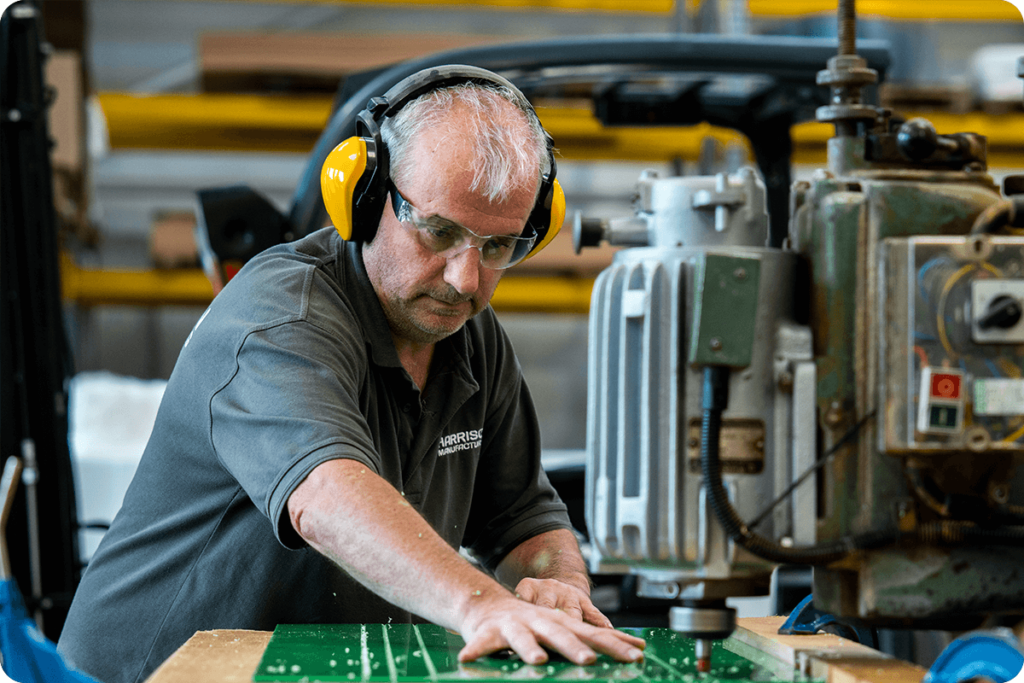
As Mark states: “We need to develop products that deliver a solution to a problem that exists for a customer. This can be achieved through close collaboration with supply chain partners, together with teamwork among Harrison’s Product Development team, Purchasing, Quality Control, Sales and clients.”
As industry leaders and experts in innovation, we are not only addressing the sustainability challenge but embracing it as an opportunity for growth. By continually pushing the boundaries of what is possible, Harrison will remain a driving force in the sustainable revolution for retail display.
Get in touch with us today to discuss your sustainable display requirements and explore how we can develop a tailored solution to suit you and your project. Email sales@harrisonretail.com and one of our team will get back to you.
In an ever-evolving retail landscape, staying ahead of the curve is essential for businesses looking to thrive in the competitive marketplace. Coupled with our ESL Data Strips, electronic shelf-edge labels have the potential to reshape the way retailers operate, providing an efficient and modern solution to pricing and product information display.
We recognise the significance of this shelf edge technology and offer ESL Data Strips that play a crucial role in ensuring the devices are held securely along shelf edges. As Charles Bedford, Managing Director of Harrison, states: “Our ESL data strips add a modern and professional touch to your retail space, ensuring that they won’t detract from the overall aesthetic of your store.”
ESLs have been a staple in retail establishments across Europe for quite some time, but their adoption in the UK has been gaining momentum recently. Leading grocers have initiated trials or deployed electronic shelf-edge labels across their stores, drawn by the undeniable advantages of a system that allows prices to be updated instantly. This dynamic pricing capability not only saves time but also offers flexibility in responding to market changes swiftly.
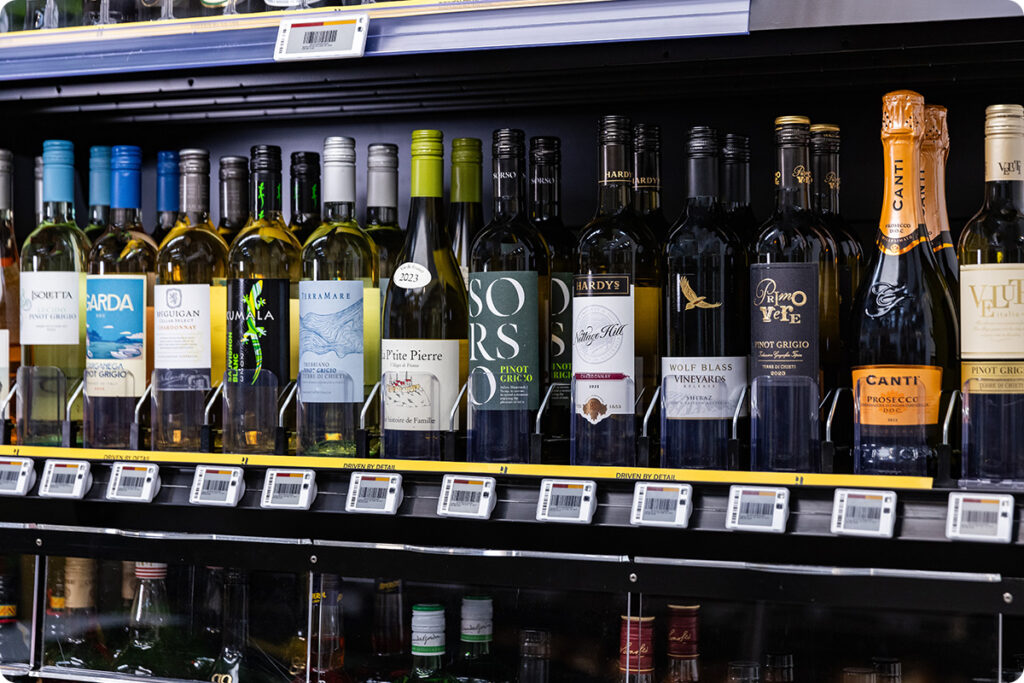
One of the standout features of electronic shelf-edge labels is their capacity to convey comprehensive product information in a concise and easily readable format. Unlike traditional paper tickets, ESLs can accommodate extensive data, enabling retailers to provide customers with valuable details about products, promotions, and nutritional information. This enhances the overall shopping experience and empowers consumers to make informed choices.
Furthermore, ESLs are not limited to merely displaying prices and product information. Some advanced systems can optimise inventory management by guiding employees through the picking and packing process for online orders. These systems illuminate a clear route, streamlining the fulfilment process and reducing errors, which is especially crucial in the booming e-commerce sector.
However, the adoption of shelf edge technology in the UK has not been without its challenges. The prohibitive cost of implementing such systems across large retail estates with hundreds of stores has been a deterrent for some. As Product Development Manager, Douglas Cook, notes: “While it seems likely that this type of technology will eventually spread across the UK, it might take some time before every store we walk into has electronic labels on the shelves. However, we have definitely seen a big increase in the number of UK retailers currently running ESL trial stores and exploring the various attachment solutions with us.”
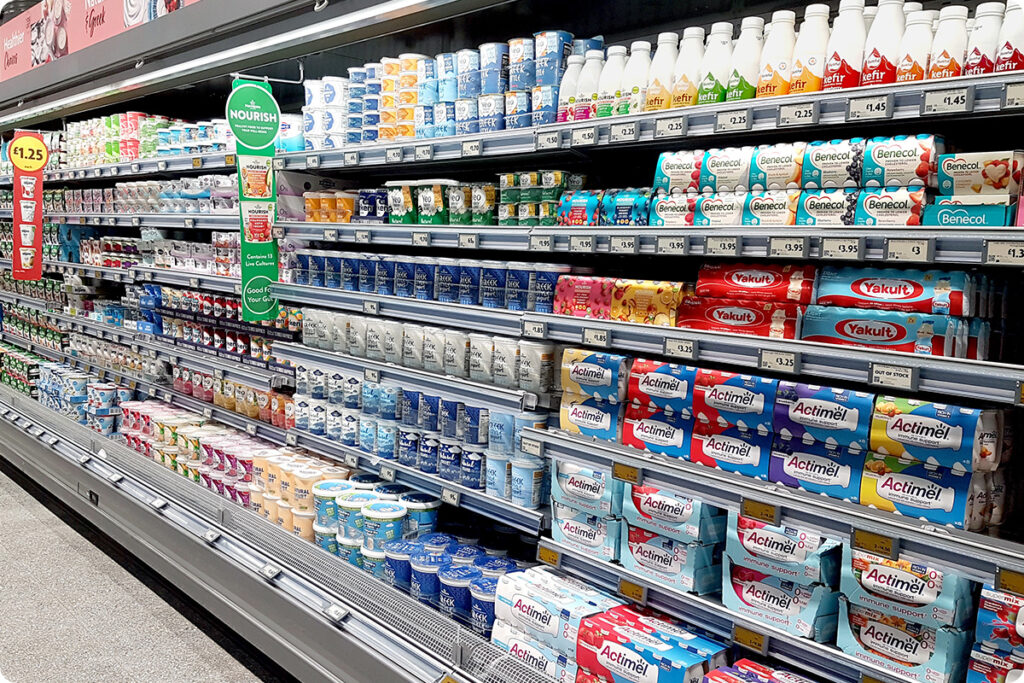
Despite the initial hurdles, ESLs are gradually gaining ground in the UK market, driven by the evident advantages they offer. Retailers are recognising the long-term benefits of reducing manual price changes, improving accuracy, and enhancing the shopping experience for their customers. As the technology evolves and becomes more accessible, it is only a matter of time before ESLs become a standard feature in UK stores.
Our ESL data strips offer enhanced mounting and display of electronic price tickets through durable, extruded plastic construction and unobtrusive finish, ensuring an uninterrupted view of products and ticket prices.
In conclusion, Electronic Shelf-Edge Labels, complemented by ESL Data Strips, are already starting to revolutionise the retail landscape in the UK and beyond. The ability to swiftly adjust prices, provide comprehensive product information, and streamline operations make ESLs an indispensable tool for retailers looking to stay competitive in a dynamic market. While challenges remain, the momentum behind ESL adoption suggests that these innovative labels are here to stay, promising a more efficient and customer-centric future for retail businesses.
We already supply a wide range of ESL ticket strips and accessories to leading UK retailers, speak to our innovation experts today to discuss your ESL project requirements by emailing sales@harrisonretail.com.
Quality underpins everything we do here at Harrison. We caught up with some of the members of our quality team recently to find out more about their work, our company’s approach to quality and the main quality-related challenges facing the retail industry.
Liam Naran is Harrison’s Senior Quality and Compliance Officer. On a typical day, his works involves a mixture of data gathering, investigation and general quality control activities.
“I’ll start by looking at anything that’s a top priority to the business,” he explains. “If any issues have been reported, I’ll open an investigation if I need to and begin pulling some data together for that.
“I’ll then look at any products that may be coming in on order and whether any quality assurance inspection needs to be performed on these types of items. We do have certain known products that are quality-sensitive where audit inspection is routinely required.”
Working on compliance documentation is another regular part of Liam’s role. “These may be documents relating to accreditations like ISO 9001 or quality control Standard Operating Procedures for the business.”

But, when it comes down it, what is quality? How do we measure it and what steps are we taking to ensure that our products and services are delivered to the highest of standards?
Mark Adams has overall responsibility for quality at Harrison and believes that a holistic approach of embedding quality principles into each part of the business is fundamental to building long-term customer satisfaction and loyalty.
Understanding quality
Perceptions of quality
“The question of how to define quality is an interesting one to consider. We support a wide variety of customers and clients at Harrison, across a range of industries and countries around the world, and everyone perceives and understands quality in a slightly different way. For us though, it falls into two main categories: quality of product and quality of service.
Quality of product is, fundamentally, how good a product actually is. Has it been finished to a high standard? Has it been produced to the required specifications? Will it fulfil its purpose? If the answers to these questions are positive then the product can be said to be of a high quality. Steps like sample approvals, prototype testing and first-off production inspection are all ways to help ensure that these high quality standards are met each time.

Quality of service is much broader. It encompasses not only the support that we provide to customers after a product has been purchased, but also how they interact with our business throughout the whole customer journey. The impact and effectiveness of our communications, messaging, imagery and online presence are all part of the quality of our service.
Quality versus specification
One of the most important distinctions to make is the difference between quality and specification. Simply put, specification is how sophisticated a product is and it takes into account everything from a product’s material and dimensions to its features and finishes. Quality is about adherence to that specification.
So whether you have a simple stock product made from low-grade materials or a complex bespoke product made via innovative emerging technology, the quality of these two products should be identical, zero defects. Communicating this effectively to our customers helps to reassure them that a lower specification doesn’t mean lower quality.”
Quality challenges in the retail industry
Sustainability
Sustainability is one of the biggest challenges facing the retail industry both generally and in terms of quality too. Retailers across the board are under pressure to reduce their plastic use and to recycle what they do use. However, maintaining the required levels of quality and specification while switching to sustainable alternatives represents a significant challenge.
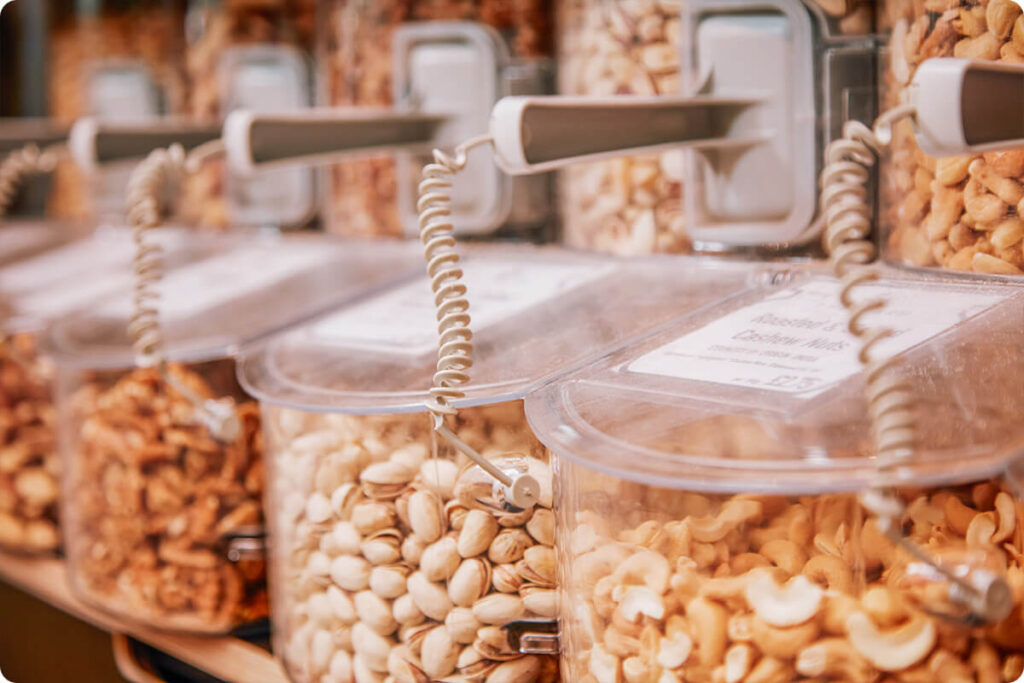
The maturity of the recycling economy and attitudes towards sustainability vary dramatically around the world. Some markets haven’t embraced recycling to the same degree as others and this includes a number of major supplier locations. There can be an absence of reliable, recycled raw material streams in these countries, making it difficult for companies to source sustainable raw materials that have the same level of consistent quality as their less sustainable counterparts. This is an industry-wide issue.
It’s a situation that requires careful management and the prioritisation of quality over cost. At Harrison we’re finding ways to be commercially innovative in order to deliver sustainability whilst maintaining our competitive market position.
Packaging
Packaging is another major area where quality problems can be experienced. Given the prevalence of overseas shipping and the number of steps that can be involved in any supply chain, it’s not surprising that shipments run the risk of getting damaged in transit. This can have cost, quality and reputational implications for any company.
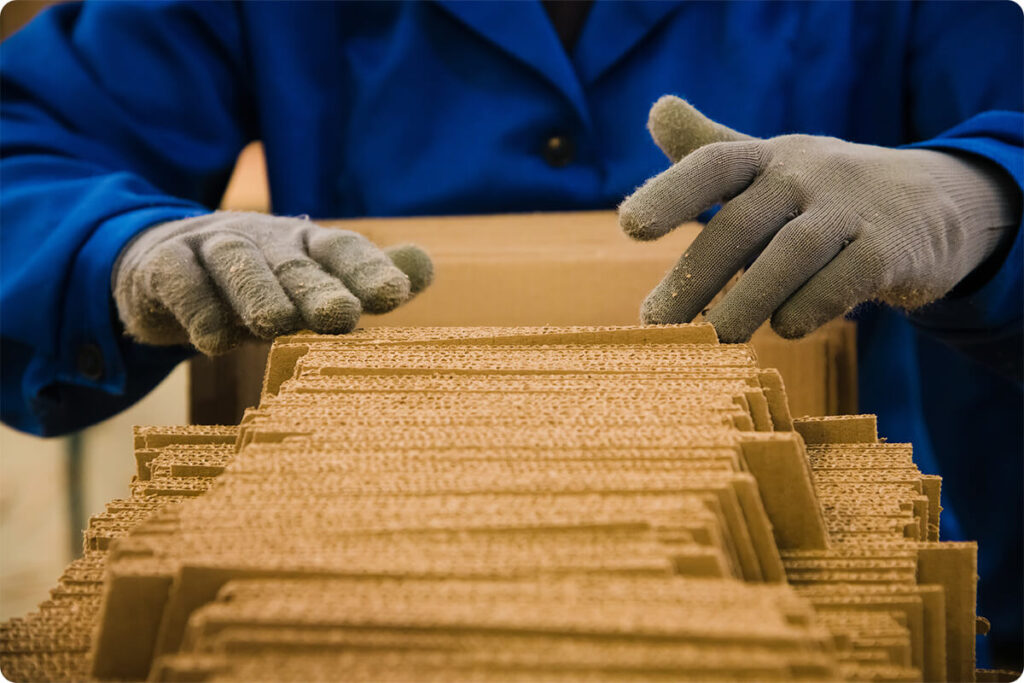
Proactive attention to packaging design at an early project stage and close collaboration with our supply chain can help to mitigate these issues. However incidents of damaged goods are occasionally encountered, necessitating a willingness to quickly address and resolve any problems to the satisfaction of the customer or client.
Quality challenges in the retail industry
Building quality into our processes
Mark’s team are part of a much wider company focus on quality that goes beyond the product.
“Here at Harrison, we aspire to a quality-first culture. Each member of the team should embrace the value that quality is of the utmost importance and seek to build quality into every area of our business.

In terms of product development, we include pro-active quality planning at every stage. This allows us to identify any issues and address them then and there, rather than unconsciously passing them onto the next step in the process. It’s about asking the right questions at the right time and learning from the lessons of the past.”
Ensuring supplier quality
“We source products from all over the world through our global supplier network. Before a new supplier joins that network, we’ll assess their quality procedures and ensure that their management values are compatible with ours. We’ll also review their international accreditations and references from other customers to ensure we can have full confidence in their approach to quality.
Advances in digital technology give us the opportunity to maintain a close relationship with our suppliers regardless of where they’re based. Virtual factory tours, regular video conference calls and shared documentation are all ways in which we can collaborate remotely and address any quality-related issues promptly and effectively.
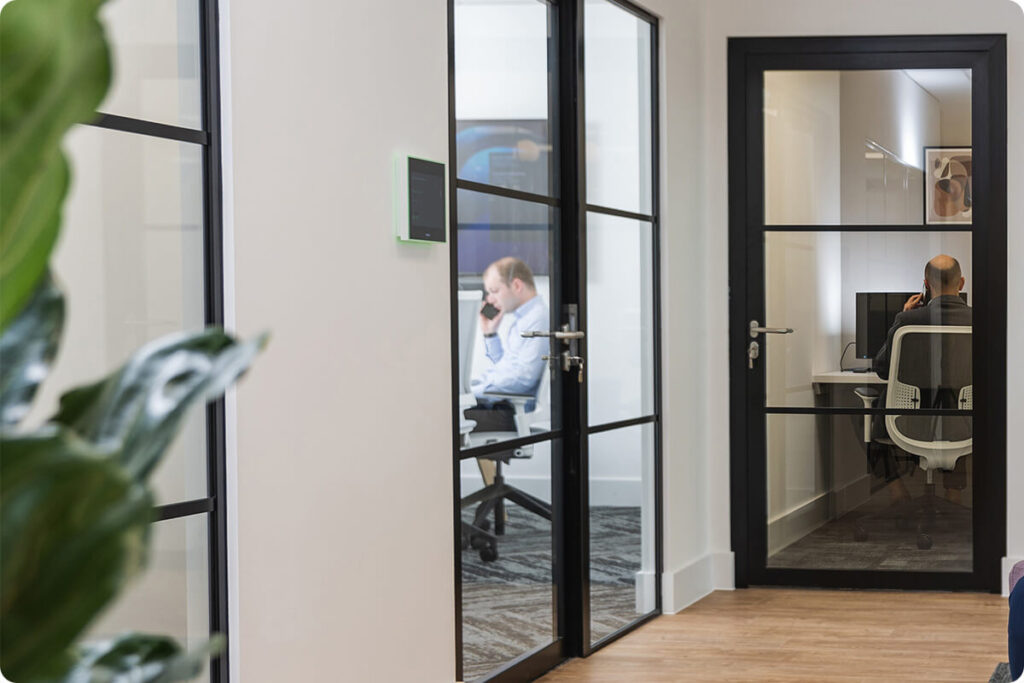
Additionally, we carry out regular product audit reviews with our suppliers to ensure that the quality of their products remains consistent. This allows us to be confident that the product they’re supplying a year down the line is identical to the product that was originally signed off for production.”
Accreditations
The first thing that a potential customer looks for in a supplier is a quality accreditation. We hold ISO 9001 certification, which demonstrates our ongoing commitment to a quality management system. A robust and functional QMS is the foundation for consistently providing products and services that meet customer and regulatory requirements. ISO 9001 is based on a number of quality management principles including a strong customer focus, the motivation and engagement of senior management, a process-oriented approach and continuous improvement.
Sustainability sits alongside quality as one of Harrison’s main priorities and so we also hold ISO 14001 certification. This accreditation maps out a framework that a company or organisation can follow to set up an effective environmental management system and underpins the steps we’re taking to reduce our environmental impact while maintaining our high-quality levels.
We are a certified carbon reduced operation, and are continuing to work at measuring and reducing the carbon footprint of our direct operations. Our commitment to continually improve our business practices and corporate social responsibility management, has also recently earned us a Gold EcoVadis Sustainability Rating.
It’s clear that there are lots of perspectives and factors to take into account when it comes to overseeing and understanding quality. But for our Senior Quality and Compliance Officer Liam and his day-to-day work at Harrison, it ultimately all comes down to two main aims.
“My role is about ensuring that we supply the best quality products to our customers that we can,” he concludes. “And ensuring that the relationships we have with our customers and suppliers are the best that they can be.”
Automation has been changing the face of the retail industry for decades. From the early days of factory-based robotics through to more recent developments like self-checkouts, chatbots and delivery drones, retailers have always sought ways to streamline their processes, get ahead of the competition and optimise the customer experience.
In this article, we’re going to explore some of the recent automation and technological trends in retail and consider what impact they’re having on the industry, workers and customers.
A till-free future?
Imagine walking into a store where you simply scan a QR code, choose your items and walk out – all without bypassing a checkout. Where a network of cameras and weighted shelves monitor which products you pick. Where payments are taken automatically and you receive a receipt via your phone later.
It seems like a bit of a fantastical concept, but it’s one that more and more leading grocers have been trialling in the UK over the last few years, with Amazon leading the way. The benefits of this approach include a lack of queueing, fewer out-of-stock items and reduced shrinkage. The downsides arguably include a reduction in staff numbers, and a level of technology and unfamiliarity that could be off-putting to consumers.
It’s this final point that perhaps explains why the UK’s path to a till-free future hasn’t been as straightforward as you might expect. When Sainsbury’s became the first UK retailer to launch a completely cashier-less store back in 2019, the trial only lasted three months before the company reinstated a manned till and two self-service checkouts. At the time, Sainsbury’s reported that while the new store format created excitement, “not all our customers are ready for totally till-free shopping”.
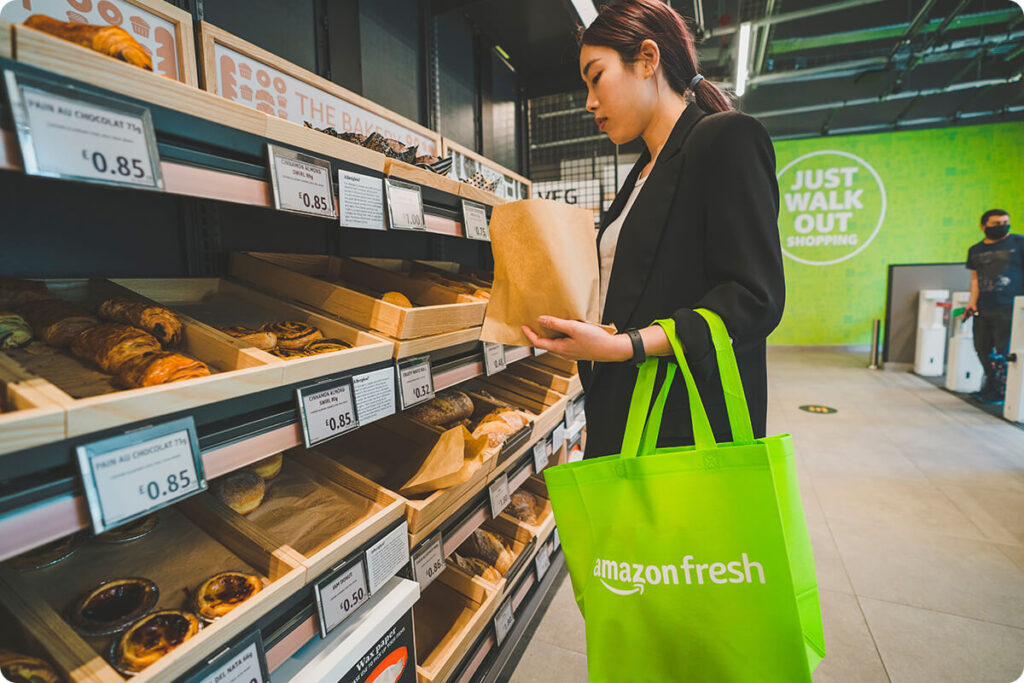
The company tried again in 2021, in a year that also saw Tesco and Aldi launch their own trials, but since then the widespread adoption of this new approach has stalled. Even Amazon, who pioneered the concept with their ‘Just Walk Out’ technology, halted plans for further expansion in 2022 and closed one of their stores earlier this year.
On paper, till-free shopping clearly has potential. But there’s a growing recognition that, as Sainsbury’s said in 2019, not enough customers are ready for it yet and that a hybrid approach with different types of checkout options is more appealing to the masses. Perhaps this will change as the younger generations that have grown up surrounded by this type of technology mature, but for the moment the idea of completely automated and cashier-less stores across the UK seems a long way away.
Creating an in-store experience
Even before Covid and the current cost-of-living crisis, the UK’s high streets were struggling. The ease and accessibility of online shopping means that retailers need to give customers additional reasons to venture out of their houses and visit a brick-and-mortar store.
Augmented reality (AR) is one of the technological innovations that some retailers have turned to in order to entice shoppers through their doors. AR works by superimposing a computer-generated image on top of what the user sees in the real world, with Snapchat filters and the popular Pokémon Go mobile game being some famous examples.
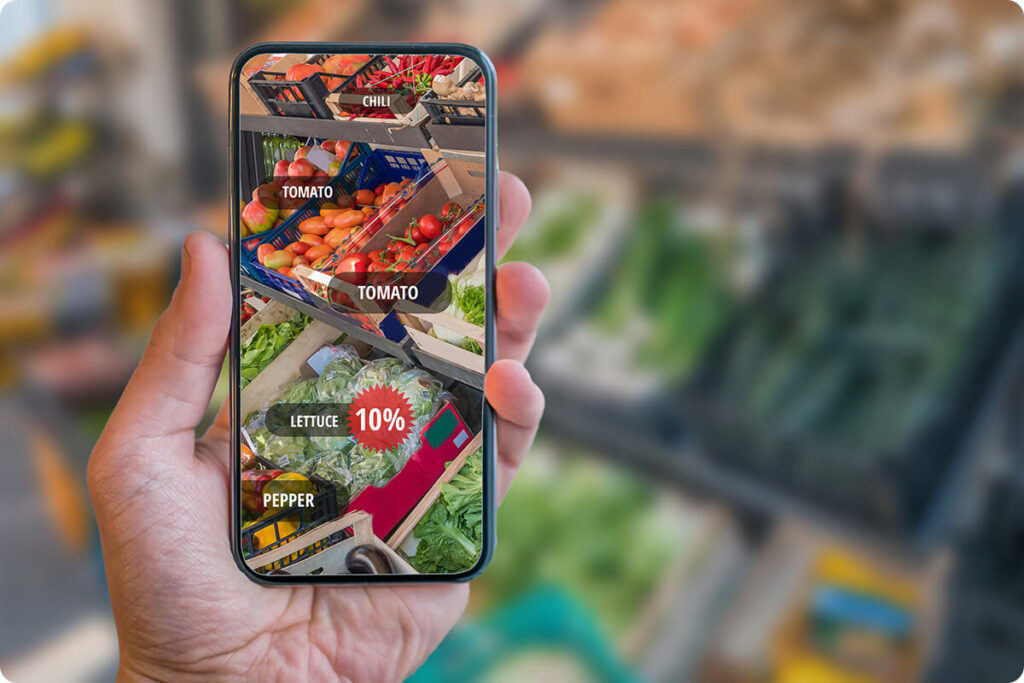
In a retail setting, examples of AR include the following:
- Virtual fitting rooms. These allow customers to try on items virtually without having to physically touch them, so that they can check the size, style and fit before buying. While the benefits of virtual fitting rooms in an online environment are clear, retailers like H&M are also installing them in their physical stores for added convenience, to support online sales and to build connections with customers.
- Augmented reality windows. These windows offer interactive experiences that help to entice shoppers into stores, such as this one that was created as part of the famous Harrods 2021 Christmas window display.
- Virtual navigation. AR navigation systems help to guide shoppers through physical stores quickly and effectively, while retailers can also use them to provide additional product information.
AR helps customers to try-before-they-buy more efficiently, it reduces customer returns, and it increases customer and brand engagement. And given that, according to data released by Shopify, retailers who add 3D content to their stores see a 94% conversion lift on average, it’s not surprising that more and more are expanding into the augmented reality space.
Geofencing is another approach that retailers are using to engage with customers. A location-based technology, geofencing allows retailers to create a virtual fence around a physical location (such as their store) using GPS, Wi-Fi or mobile phone data. Then, when customers pass into that area they can trigger targeted marketing such as a text, in-app notification or mobile advert.
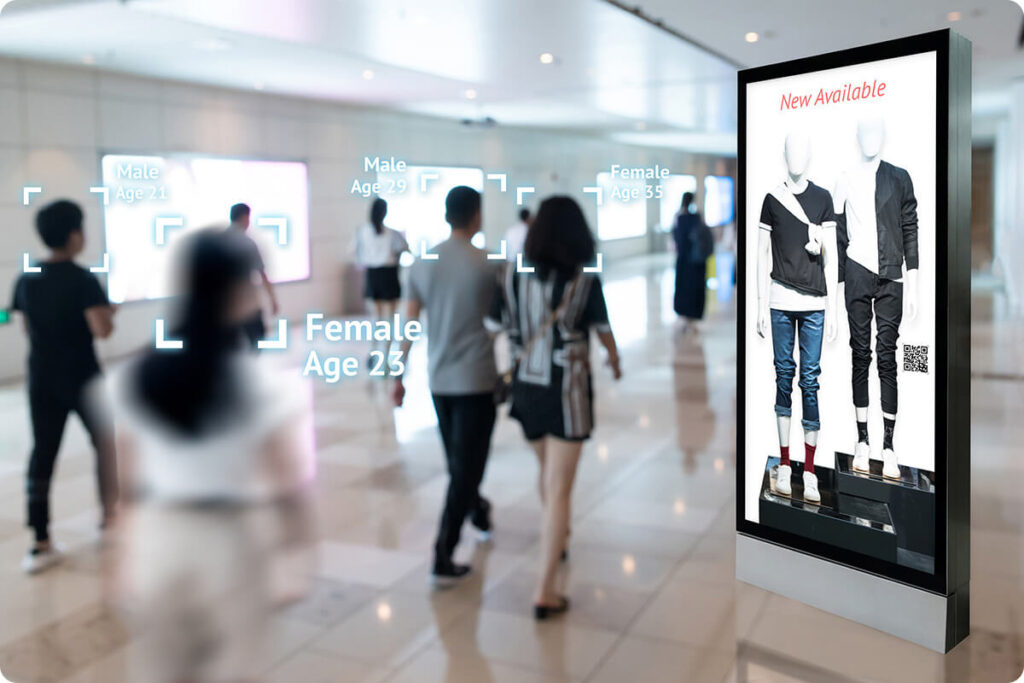
It’s a clever way for brick-and-mortar retailers to deliver offers and deals straight into the hands of their customers, to create a personalised shopping experience by providing directions to products or reminders about regularly buys, and even to target potential customers that are shopping at a rival store.
AR and geofencing, along with more online-focused approaches and technologies such as gamification and the metaverse, are some of the main ways that retailers are seeking to create the immerse shopping experiences of the future. The challenge will be how to get the most out of these digital innovations while bringing their target audiences along for the ride.
Improving the bottom line
As well as customer-facing advancements, automation is also becoming increasingly common behind the scenes in the retail sector.
Many retailers are investing in software that more effectively manages stock levels, suppliers and orders, in order to streamline processes and reduce labour costs. Innovations like providing staff with handheld devices to take instant orders in a restaurant, to check sizes in a shoe store without having to leave the customers or to ring up purchases on the floor in a clothing store are also helping to increase efficiency and levels of customer service.
Electronic shelf labels (ESLs) have long been popular overseas, but they’re starting to be seen more frequently in the UK now too. A number of leading grocers have launched trials or rolled ESLs out to their estates recently, lured by the time- and cost-saving benefits of a system where prices can be changed at the click of a button.
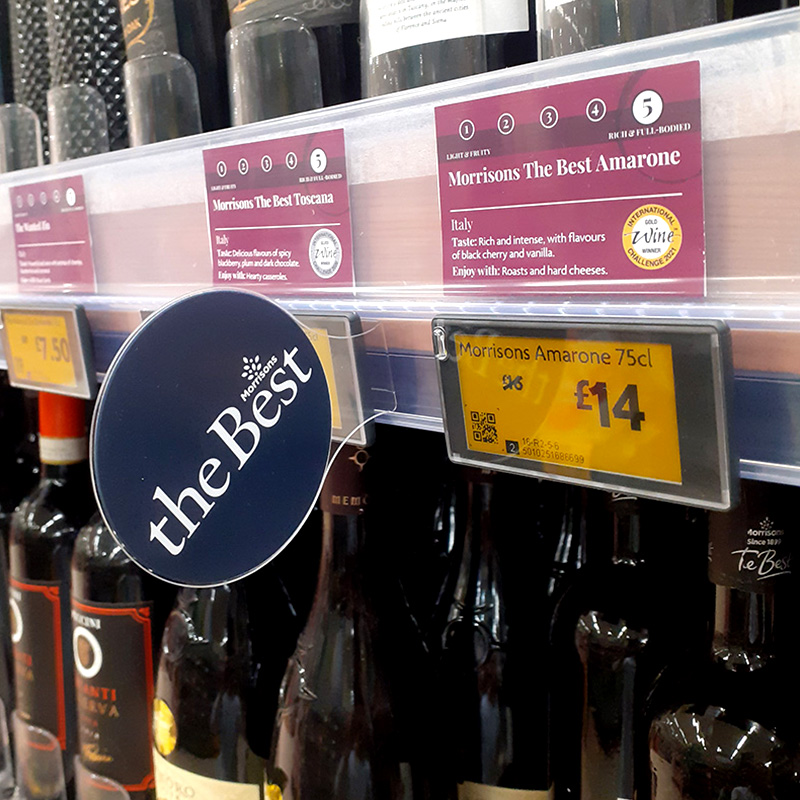
Case Study: Morrisons
When Morrisons decided to trial replacing in-store paper price tickets with ESLs, they contacted us to discuss their requirements and the challenge of fitting an ESL to a conventional plastic data strip.
We developed a bespoke solution that would fit their shelves and hold their ESLs securely, which were then rolled out across the trial stores.
ESLs accommodate dynamic pricing and have space for more product information than paper tickets. Some ESL systems can even help to speed up the picking and packing process for online sales as they’ll provide an illuminated route for employees to follow.
However, despite their many benefits, the response from the grocery sector hasn’t been unanimous perhaps due to the prohibitive cost of implementing such a system across estates with hundreds of stores. While it seems likely that this type of technology will eventually spread across the UK, it might take some time before every store we walk into has electronic labels on the shelves.
21st century deliveries
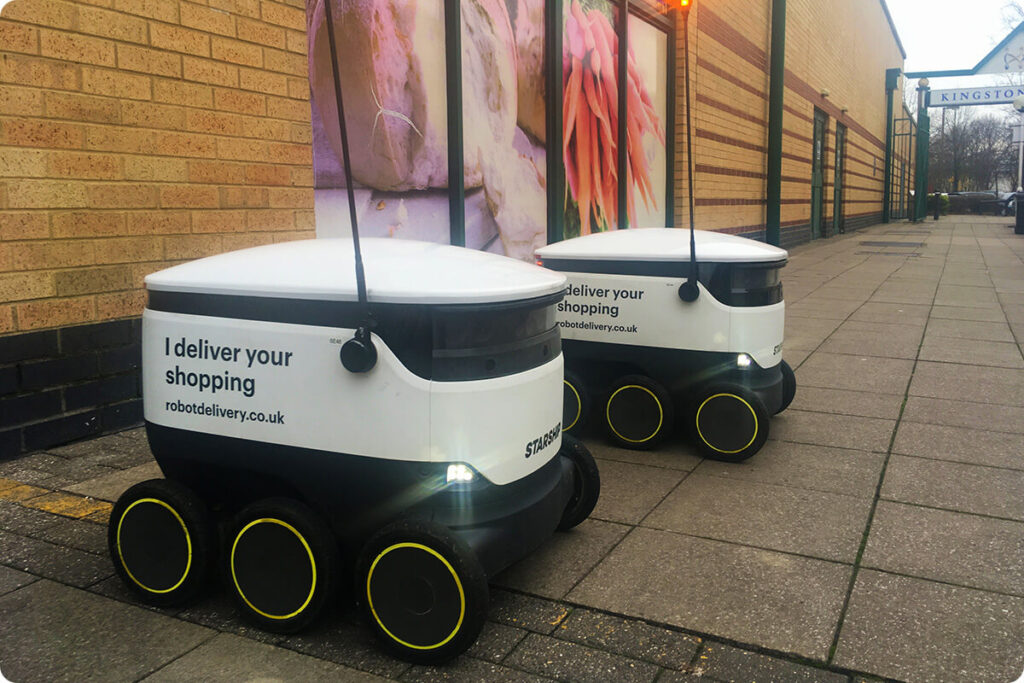
One of the newest – and perhaps most intriguing – retail automation trends is robot delivery systems. Co-op has been spearheading the technology’s adoption in the UK, in partnership with US-based company Starship Technologies, and now offers autonomous delivery services in Greater Manchester as well as other key cities.
The main aims of delivery robots are to reduce traffic congestion and increase access to the company’s products and services. Orders are made through an app and customers can follow the progress of their robot delivery driver in real-time through an interactive map. While the service is still very much in its infancy, it’s expanding quickly and early results appear to be positive.
Delivery drones are another automated delivery service that has been gaining significant traction over the last few years. From Boots completing the first delivery of prescription medicines to Royal Mail trialling drone deliveries in the islands of Scotland, the infrastructure is slowly falling into place to create an environment for drones as a standard delivery service.
In fact, there’s currently a project underway (and backed by the UK government) to create the world’s longest automated drone ‘superhighway’ connecting the Midlands to the south-east of England. Project Skyway has brought together leading tech companies and industry experts to establish a safe path for commercial drones and provide a framework for further drone zones in the UK.
There’s a long way to go for both delivery robots and delivery drones, but what may have once seemed like science fiction is beginning to look more like reality. And it’s not inconceivable to imagine sharing the streets with fleets of robots and the skies with delivery corridors in the future.
It’s going to be fascinating to see where automation takes the retail industry next. While some of the technologies we’ve discussed in this article have run into stumbling blocks, or we’re unlikely to see widespread adoption any time soon, the potential of the ideas is undeniable. And the impact they’re having on the industry, customers and workers is going to continue to change the face of retail for years to come.
We’re delighted to announce that we’ve recently move into a new custom-built office and warehouse facility in the heart of the West Midlands.
Located on the outskirts of Evesham, our new buildings are a real investment in the future of Harrison. They give us an inspiring and collaborative space to work in, as well as room to expand as our company continues to grow and service customers around the world.
We’re looking forward to welcoming guests and clients to our new office, but in the meantime here’s a sneak-peak at what you’ve got to enjoy when you visit.
Ground floor
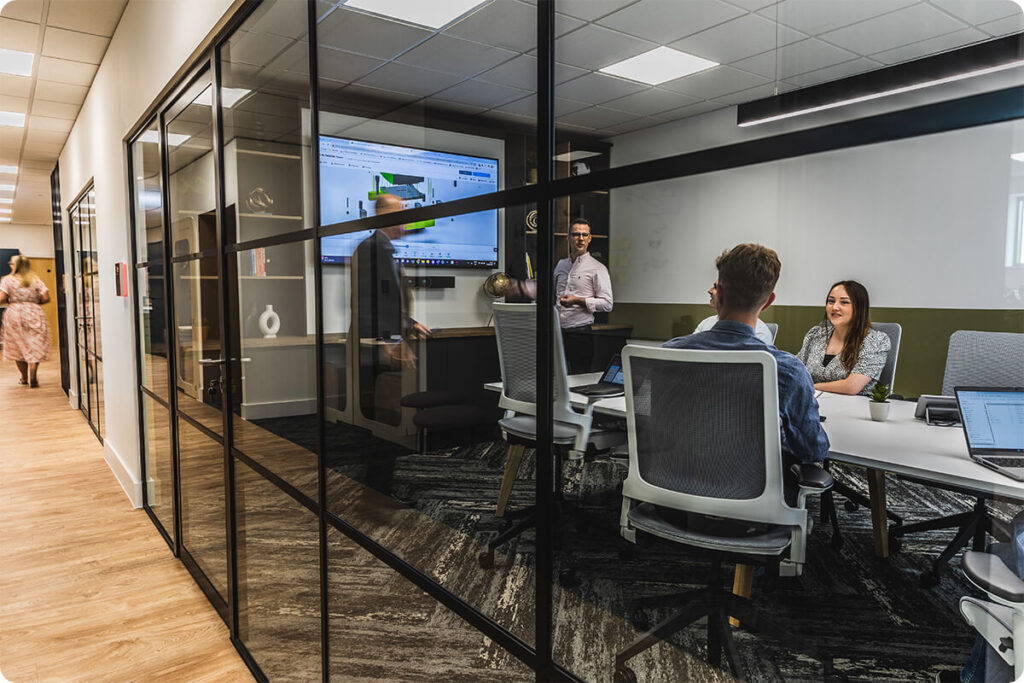
The ground floor is home to our hard-working product development, HR, IT, finance, purchasing and quality teams. As you can see, the new interior has a Scandinavian feel to it with lots of clean lines, natural woods, neutral colours, live plants and a calm, uncluttered design.

The ground floor is also where you’ll find our kitchen, the larger meeting rooms (including our boardroom) and a range of collaborative spaces. All of them have been fitted with the latest communication equipment to support regular meetings and close collaboration with our clients either in-person or digitally.


First floor
The first floor is where our marketing and sales teams are based. The Scandi-inspired design continues here, with floor-to-ceiling windows creating a light and airy space for our teams to enjoy.
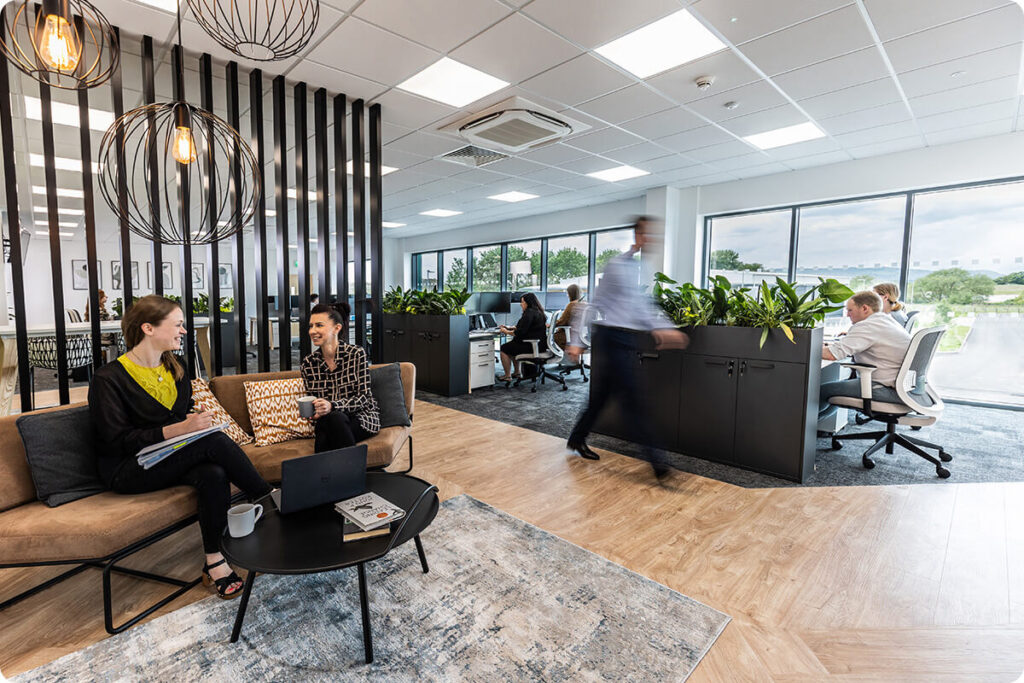
There are ample further meeting rooms and collaboration spaces to be found, along with some pods for focused working.

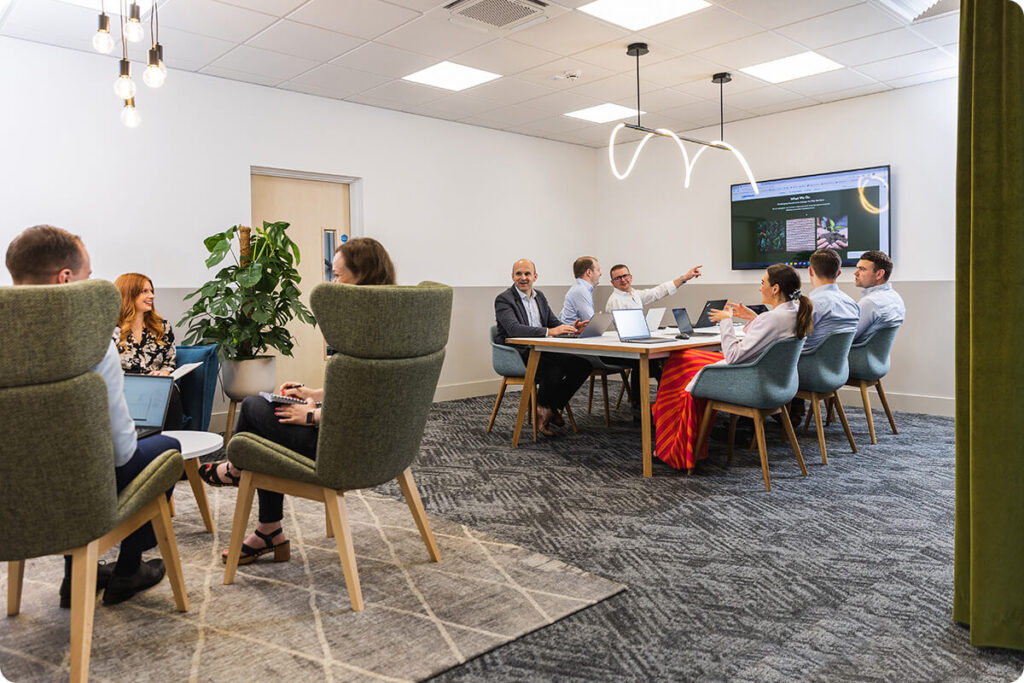
There’s even a quiet little collaboration area at the top of the stairs, which probably boasts some of the best views in the office!

Warehouse
Behind the new office is our new warehouse, which provides plenty of room to hold our stock. There are also exciting plans underway to develop a showroom within the warehouse where we can showcase our products and services going forward. We’ll be sharing more information about those plans as they develop, so stay tuned.
We’re also pleased to say that the main power source for our new buildings are the solar panels on the roof, which will provide renewable energy alongside a back-up metered connection. Other energy-saving features such as lights that automatically switch off when rooms aren’t in use have been included inside, to help minimise the building’s impact on the environment.
And there you have it! The new Harrison HQ, where you’ll find both the Harrison Products and Harrison Retail teams hard at work delivering retail display products and services worldwide. To find out more about what we can offer you, get in touch with our teams today.
When you pop down to your local high street, you probably expect to see a mixture of clothing stores, coffee shops, homeware stores, banks, cafes and express supermarkets. But what about a garden centre?
It’s a sight that might surprise many of us, but it’s also one that’s starting to become increasingly familiar as part of the rapid growth of the garden centre industry over the last few years. In this article, we’re going to take a closer look at the reasons behind this growth and what the future might hold for garden centres in the UK.
Garden centres have been thriving
While the pandemic and associated lockdowns had a negative impact on the bottom line of many retailers, garden centres were quickly designated as ‘essential’ by the government and allowed to remain fully open (due to their positive impact on physical and mental wellbeing). This, combined with an influx of new customers who took up gardening during the lockdowns, helped to drive the industry to a value of approximately £3 billion in 2022.
Another contributing factor to this growth is how many garden centres have expanded their product and service offerings, establishing themselves as destinations rather than simply places that sell plants. Homeware, food, outdoor living, pets and gifts are just some of the additional sectors that many have expanded into, providing customers with a retail experience that’s more reminiscent of department stores than traditional garden centres.
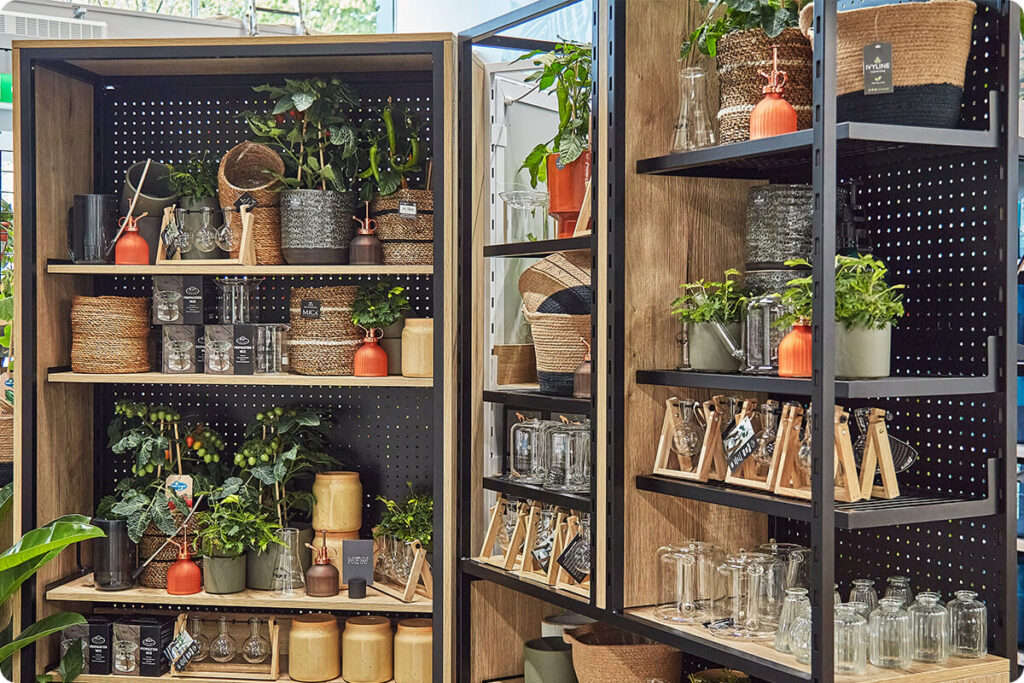
Garden centres as lifestyle retailers
Embracing lifestyle retail is a smart move. With the loss of established names like BHS and Debenhams – and a staggering 83% of UK department store space shutting down for good between 2016 and 2021 – there’s a distinct gap in the market for retailers who can appeal to that lifestyle customer base.
Garden centres have a lot of advantages when it comes to filling that gap. They’re usually located in attractive, often rural, surroundings on the outskirts of towns and cities. They often have room for ample parking and retail expansion. And they’re generally easy to access. All of which combines to create the ideal environment for department store-esque shopping.
But what about those high street stores we mentioned earlier? What role do they play in the future of garden centres?
Garden centres on the high street
The company leading the charge is Dobbies Garden Centre, the largest garden centre retailer in the UK. Dobbies has 76 centres located throughout the UK and six of these are what they call ‘Little Dobbies’ stores. You’ll find them on high streets in major towns and cities, and they offer a unique, urban garden centre experience.

Case Study: Little Dobbies, Cheltenham
We were asked to design, produce and install bespoke display fixtures for the latest Little Dobbies store. The fixtures needed to match the look and feel of other Little Dobbies, while staying true to the aesthetics of the main estate.
The project had a tight turnaround as the fixtures were required by the store’s opening. We rose to the challenge and produced, supplied and installed 16 fixtures including the main customer till hub and coffee unit.
Speaking at the launch of the first store in Edinburgh, CEO Graeme Jenkins described it as featuring “gardening essentials for city centre residents” and showcasing “some of the extensive ranges available at our larger stores and at dobbies.com”.
With a carefully curated range of convenient houseplants, small space gardening products and home décor items on display, the stores are specifically targeting the needs of urban gardeners and acting as gateways to the full Dobbies’s range. It’s a different proposition to the larger stores, but still allows customers to make those aspirational lifestyle purchases. It also neatly addresses the growing popularity of houseplants, particularly among the younger generations, where social media sites like Instagram have proven to be a rich ground for gardening- and plant-based content.
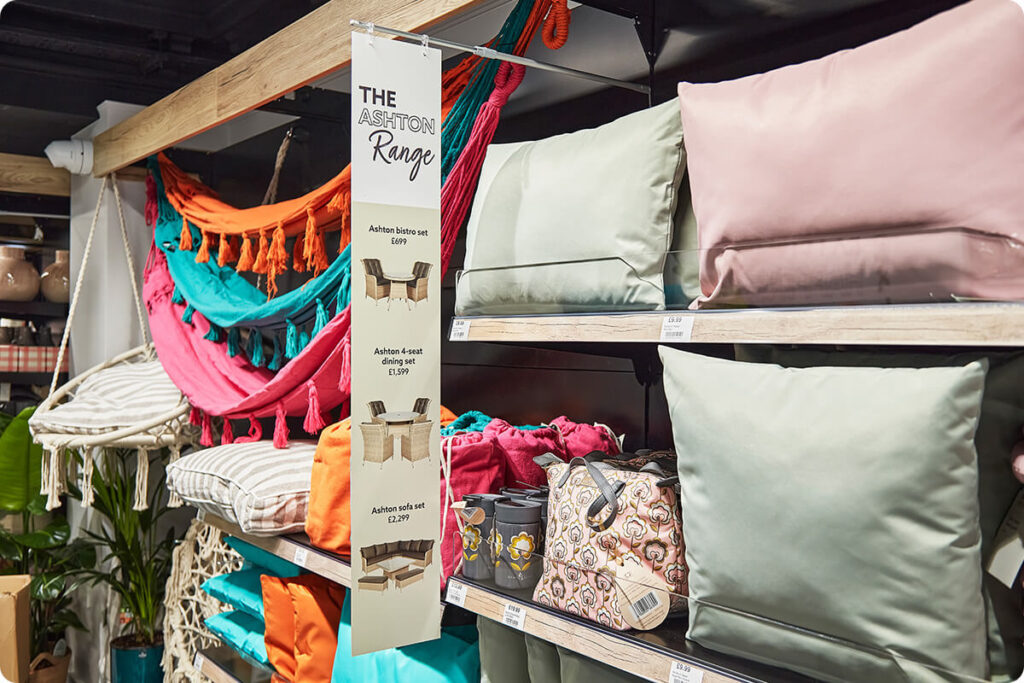
Garden centres as the new department stores?
The question of whether garden centres have become the new department stores (or are on their way to becoming them) is a complex one to answer. But it’s interesting to note how department stores themselves and other leading lifestyle retailers have branched out into the gardening sphere.
The likes of House of Fraser, Selfridges and M&S all have gardening furniture, gardening tool and/or plant ranges. Next launched mini Homebase garden centres within six of their stores in the summer of 2021. And through Waitrose Garden, the John Lewis Partnership has a dedicated online garden centre to rival the traditional physical stores. It’s clear that the potential to merge homeware, food, clothing, furniture and more with gardening products is one that’s proving attractive to more than just garden centres themselves.
Time will tell what the future holds for garden centres and whether they truly will supersede department stores in the public consciousness. But given the vibrancy of the market, it’s a future that’s looking ripe with possibilities.
Want to find out more about our work with Dobbies?
Discover how we helped them to transform their flagship store
Customers come in all shapes and sizes, but there are certain common customer types that we can all recognise.
Understanding these types and how to engage with them effectively through your POS, retail displays, in-store sales approach, online presence and more can help you to encourage sales.

Customer profile: Researchers have put in the hard work online beforehand and come equipped with the knowledge they need to make an informed purchase. They’re less likely to spend time browsing as they’ve already identified the product or products that they’re interested in.
Engaging with them: As these customers often make their purchasing decisions before visiting a store, you need to engage with them as effectively as possible during the research stage. Make sure that your online product information is accurate, your prices are competitive and you’ve provided answers to common questions (e.g. through FAQs).

Customer profile: Showroomers like to visit stores in order to try products on or test them out, but they’re also price-conscious and may opt to buy online rather than in person if it means better value for money. This customer type will often use money-saving or price comparison apps in order to track down the best deal.
Engaging with them: With this type of customer, it’s important to make the purchase about more than just price and to emphasise the benefits of buying in store. The immediacy of an in-store purchase is a key win here, as are any additional in-store promotions that you may be running, so make sure your POS displays are impactful.

Customer profile: Browsers lack any particular reason for being in your store and are just looking around. It could be that something in the window caught their eye or they’re simply killing time, so they’re browsing without really intending to make a purchase.
Engaging with them: These customers should generally be left to their own devices as they’re effectively sight-seeing in your store. Converting them into paying customers can be a tricky task, but encouraging impulse buys by having dump bins or baskets in strategic locations could help.

Customer profile: Customers on a mission know exactly what product they want to buy and want the transaction to go as quickly as possible. They’re not looking to spend any longer in your store than they need to and won’t appreciate any deviations from their mission.
Engaging with them: These customers are likely to appreciate appropriate signage, logical store layouts and clear POS materials so that they can locate their intended purchase as quickly as possible.

Customer profile: As the name suggests, indecisive shoppers aren’t exactly sure what they want to buy or are struggling to choose one product over another. They can often lack the information they need in order to make that decision and can be overwhelmed by the number of options available.
Engaging with them: You can help this type of shopper by providing clear and accurate information about your products, both online and in-store. Use effective POS, shelf management products and displays to make the customer journey as smooth as possible, and be on hand to answer any questions they may have.

Customer profile: Bargain hunters have one main motivation: price. They want to feel like they not only purchased a great product, but got it at a great price too. Less loyal than other customer types, they’re willing to shop around in order to track down a saving.
Engaging with them: Customers that are driven by price can be difficult to engage with unless you happen to be able to offer the cheapest deal. One tactic can be emphasising the quality of your product and therefore its longevity, which will likely save them money in the long-run. Also, make sure that any promotions you’re currently offering are clearly displayed.

Customer profile: Regular customers are loyal visitors to your store. They visit you regularly, without any specific prompting, and respond positively to your products and services.
Engaging with them: These customers are the easiest type to engage with as they’re already invested in what you have to offer. Your existing POS materials, signage and display tactics are doing their job in appealing to this customer, so continue in the same vein and look for additional opportunities to make them feel valued.
Looking for innovative display solutions?
Contact our team today to find out how we can help
Being a product designer responsible for creating innovative POS solutions, obsessiveness comes with the territory. I’m always thinking about the next big thing in retail and how we can provide products our customers need and want, and that are as environmentally-friendly as possible too.
At Harrison, we’re committed to championing sustainability and developing products that minimise the retail sector’s impact on our planet. While some level of plastic is seemingly unavoidable in our industry, manufacturers and suppliers like us are investing considerable time and money in designing and producing sustainable alternatives.
Finding a solution to an industry-wide problem
Something we found troublesome (up until our lightbulb moment in 2018), was how free-standing display units (FSDUs) were being discarded into landfill, complete with the plastic corr-a-clips that were used to hold the units in place.
After several weeks of scribbling on whiteboards, brainstorming ideas over coffee, evaluating the pros and cons of each suggestion, and generally scratching our heads, we hit upon a solution.
What if we could create a cardboard clip to support a shelf on a FSDU? One that was simple enough to construct and could go into standard recycling streams? And one that was even compostable? The world’s first cardboard corr-a-clip was born!
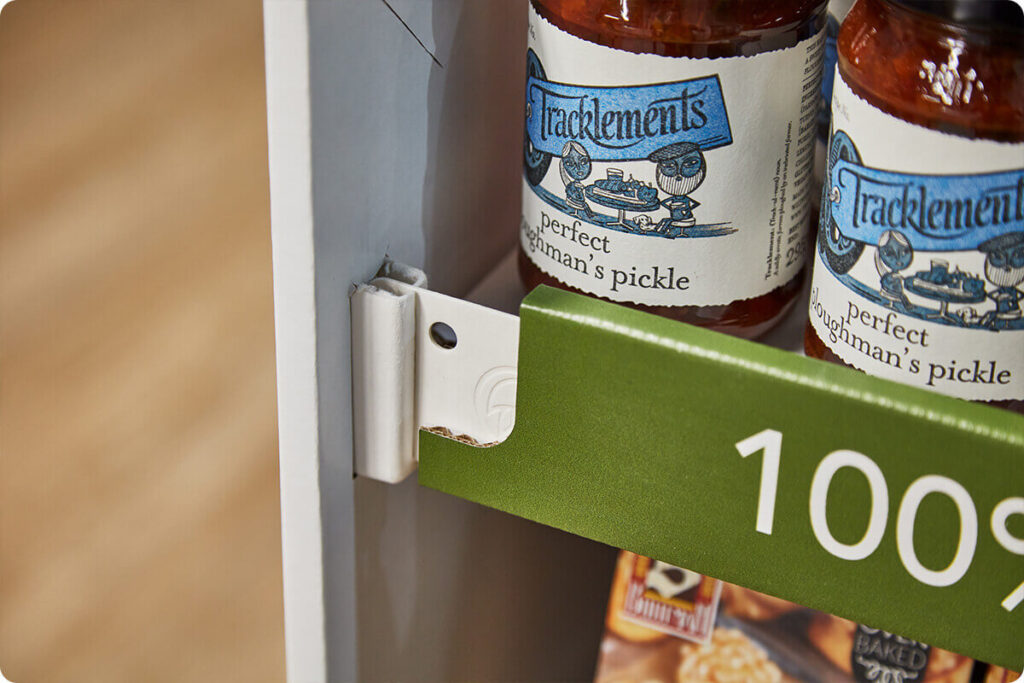
The global unveiling of our solution
Trials began a few months later, primarily focusing on durability and strength. Then it was time to unveil our latest innovation at the world’s number one retail trade fair: EuroShop 2020 in Dusseldorf. The reception was extremely positive and the orders began pouring in.
That was until Covid-19 arrived one month later and those orders were put on hold while everyone tried to adjust to the new normal. The sudden increase in demand for PPE meant we turned our attention to supplying customers with sneeze screens and hand sanitiser stations instead of corr-a-clips (which wasn’t our typical product offering!).
When life slowly started to get back to normal, we were able to re-focus on the cardboard corr-a-clips and sales began to boom once again. We’re happy to say that millions are now being used across the market.
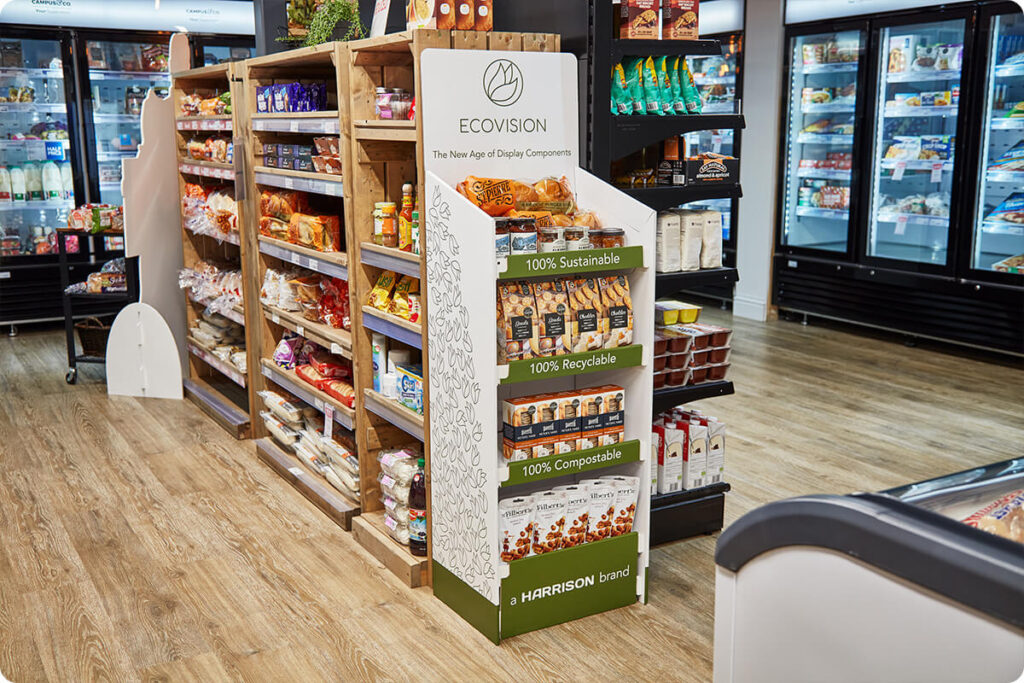
I’m enormously proud of the product and the team of designers at Harrison. To see another creation brought to life always brings a great sense of achievement, especially one that minimises our impact on the planet. Our cardboard corr-a-clips decompose significantly faster than synthetic materials if they accidentally end up landfill and that’s worth celebrating.
Time to get back to working on our next big innovation!
- Keen to sample our cardboard corr-a-clip? Contact us on sales@harrisonproducts.com and we’ll pop one in the post.
- Check our our recent article on Exploring Sustainability in Retail for more insight into how the retail industry is responding to changing customer mindsets about the importance of sustainability.
- Read more about how CarbonQuota has officially recognised us a carbon reduced operation.

By Douglas Cook
Product Development Manager
Douglas Cook is a product development manager at Harrison, responsible for overseeing the design, testing, and development of innovative POS and retail solutions. These include the world’s first cardboard corr-a-clip and a range of biodegradable EcoPlastic products.
Douglas is passionate about the retail industry along with the exciting opportunities and challenges it presents. Working with his team of talented designers, he loves bringing new products and solutions to market, overcoming obstacles, and challenging the norm.
A Harrison employee for more than 15 years, Douglas has worked in several departments including purchasing and the warehouse. With a thorough understanding of product capabilities, he and the team create robust, sustainable, and cost-effective solutions.